There’s something to be said about viable business models when the biggest advertisers on the most-watched tournament in this cricket-crazed country is a gambling app and chewing-tobacco company.
And in a typical “treat the disease, not the patient” approach to everything here, SEBI and the FinMin is after option traders without pausing to fix the warped incentives that caused the current state of affairs.
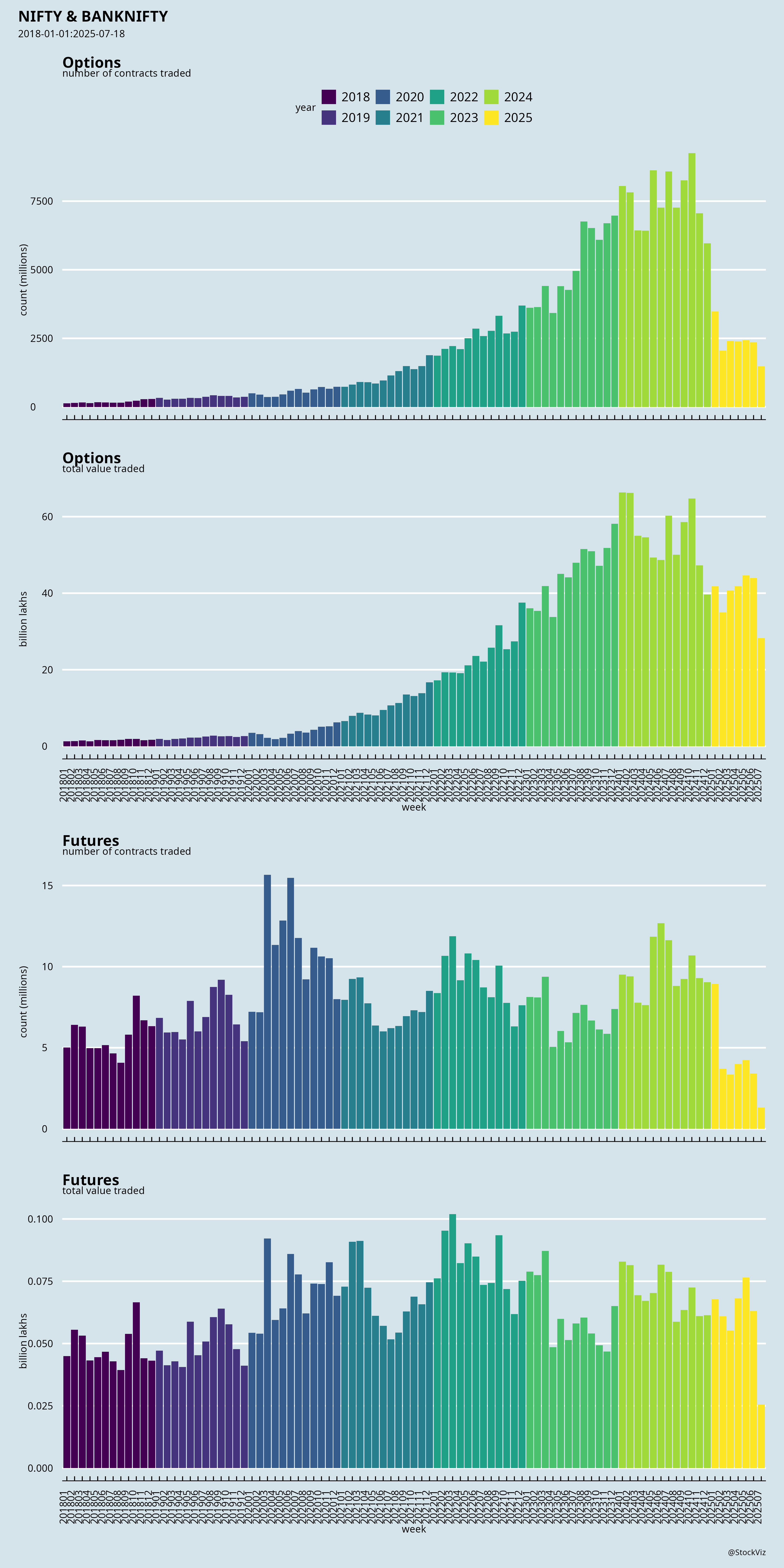
What caused option volumes to go exponential from 2021? And why didn’t futures participate?
In 2021, SEBI implemented changes to peak margin requirements, significantly impacting intraday trading leverages. Starting September 1, 2021, 100% of the peak margin had to be collected upfront, reducing intraday leverage for equity and F&O positions. (zerodha)
Combined with STT of 0.02% being charged on the full notional of a futures position, this had the effect of pushing traders towards options.
The stock exchanges and brokers rode this move to all its glory.
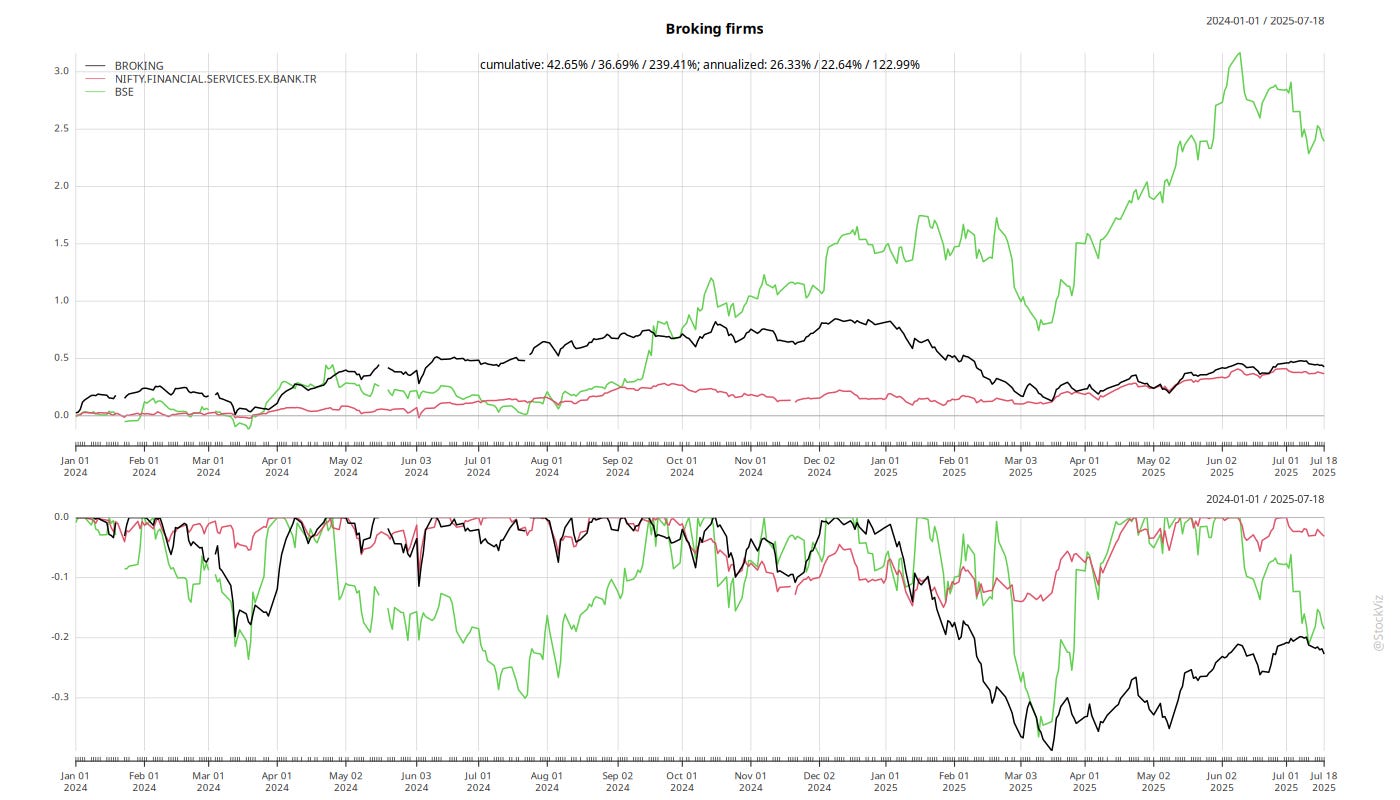
Now, SEBI wants to reduce options trading volumes instead of trying to increase equity trading volumes. They already took a swing at this last year (indiatoday) and they seem to be on a warpath under new management. And, since most of the speculation happens in weekly expiries, they are thinking of replacing it with fortnightly expiries (economictimes) and introducing maturities of up to one year (timesofindia), because, clearly, we are all children who need to be protected from the consequences of our own actions.
Markets this Week
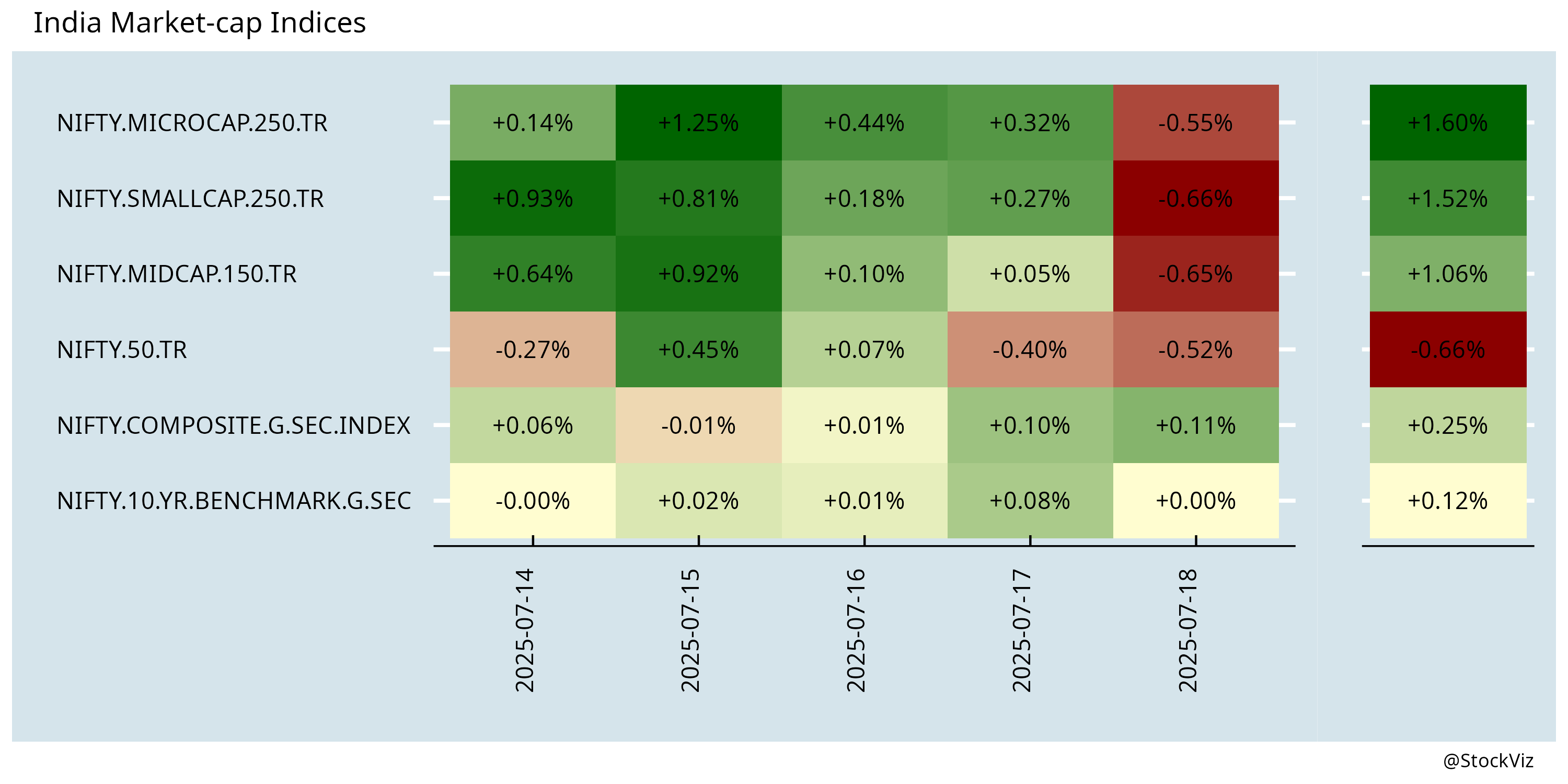
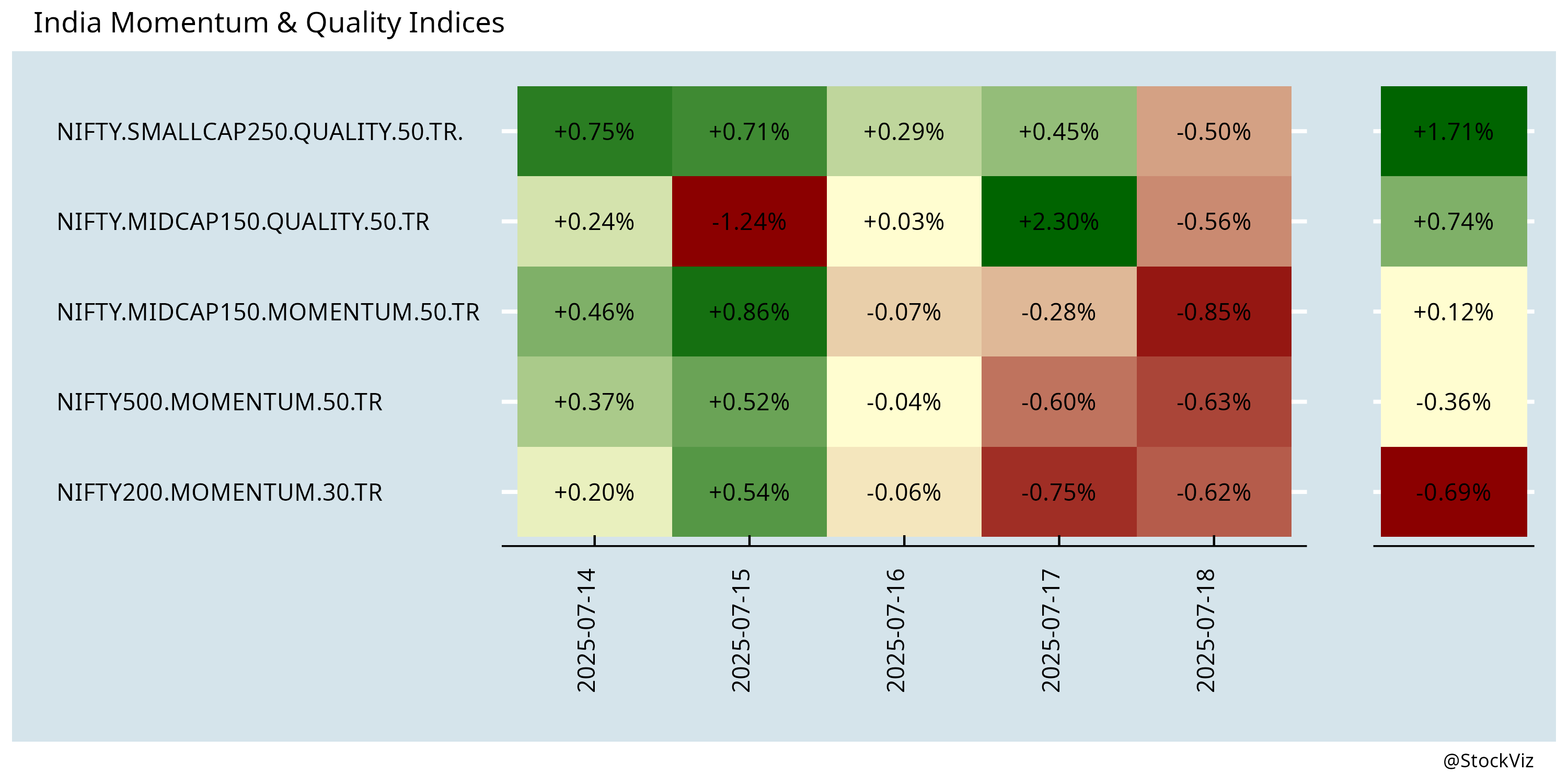
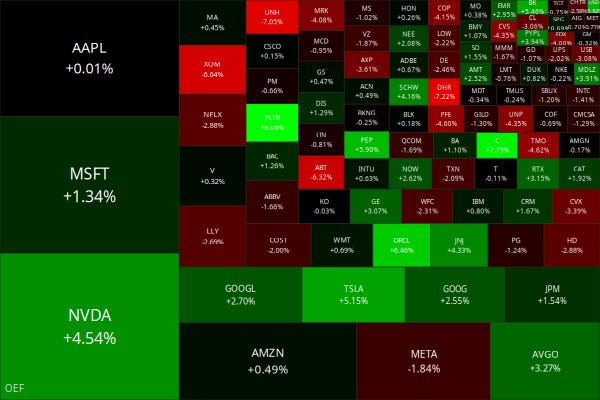
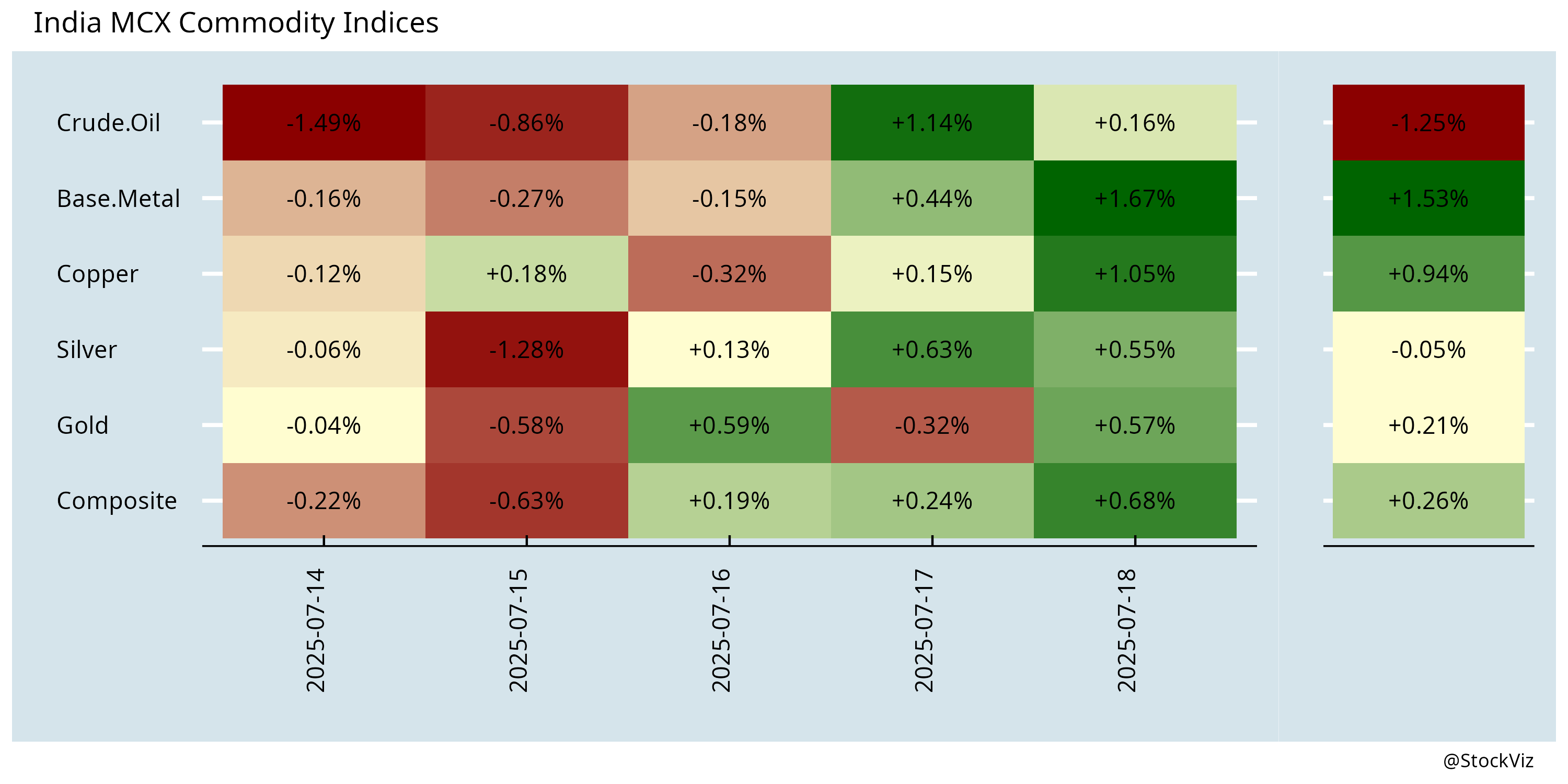
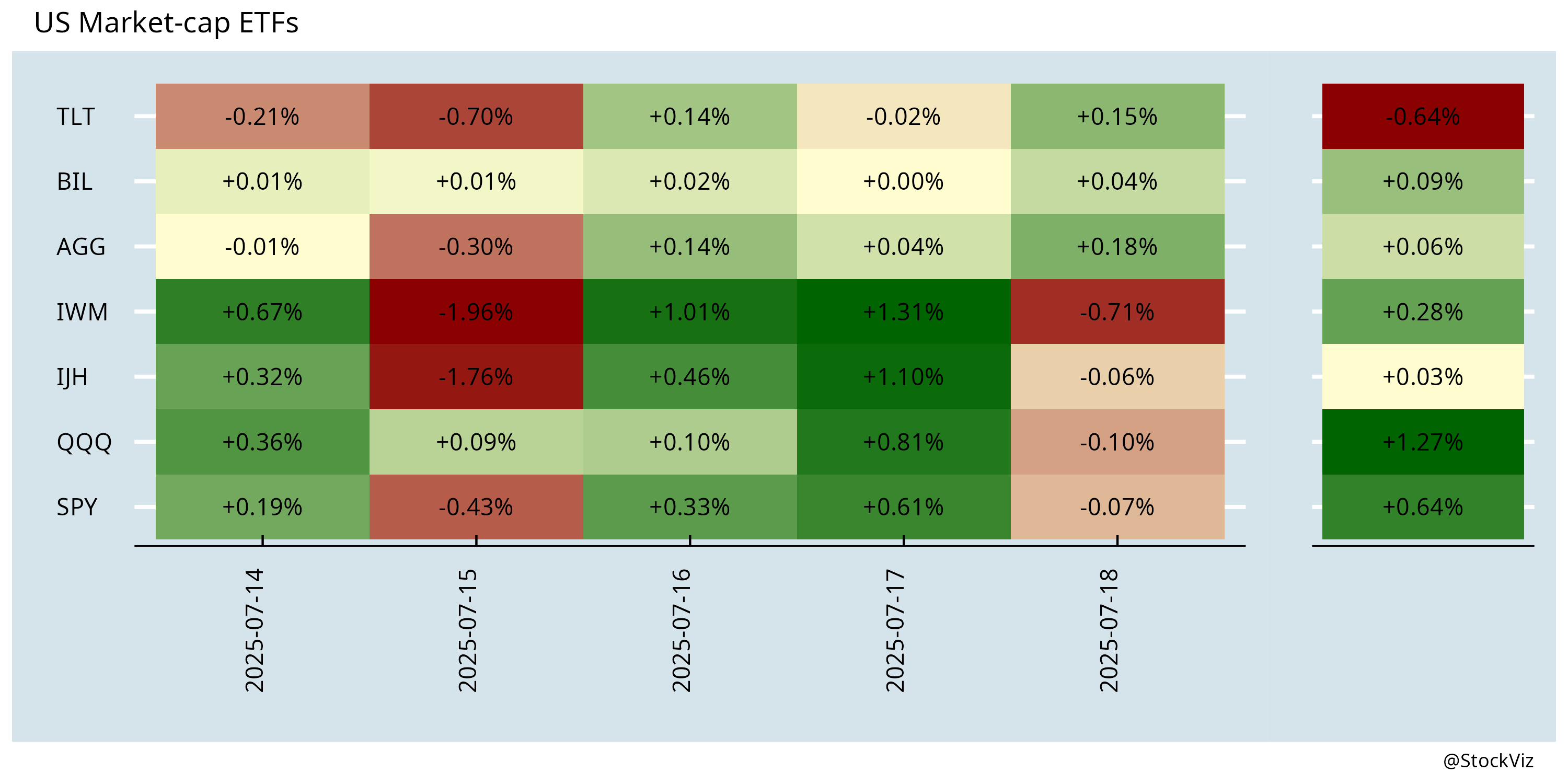
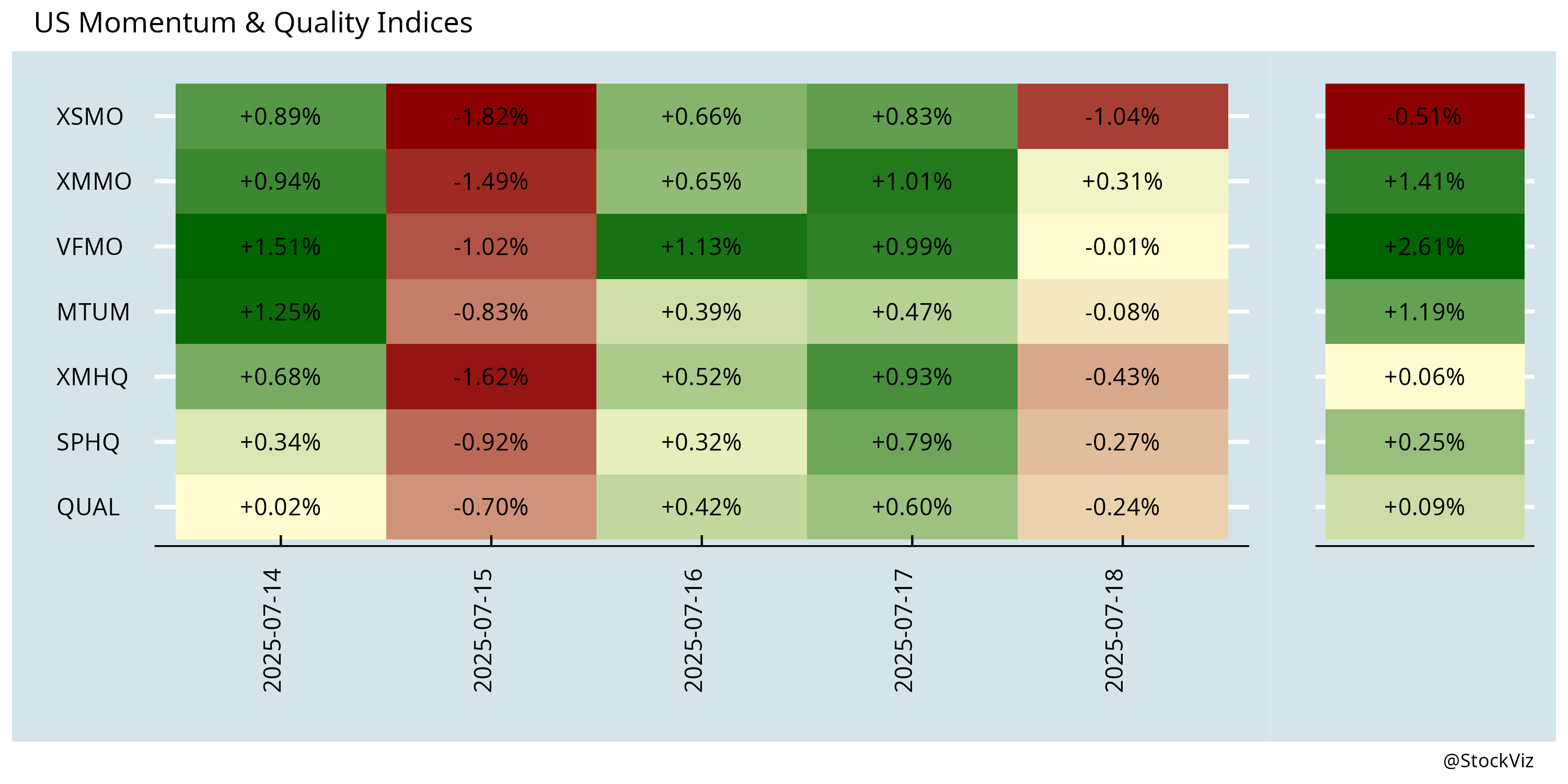
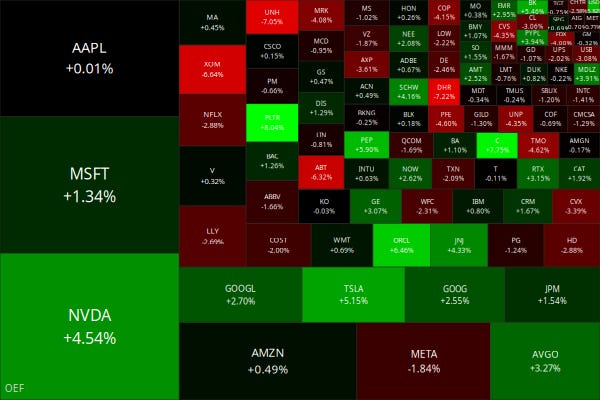
More here: country ETFs, fixed income, currencies and commodities.
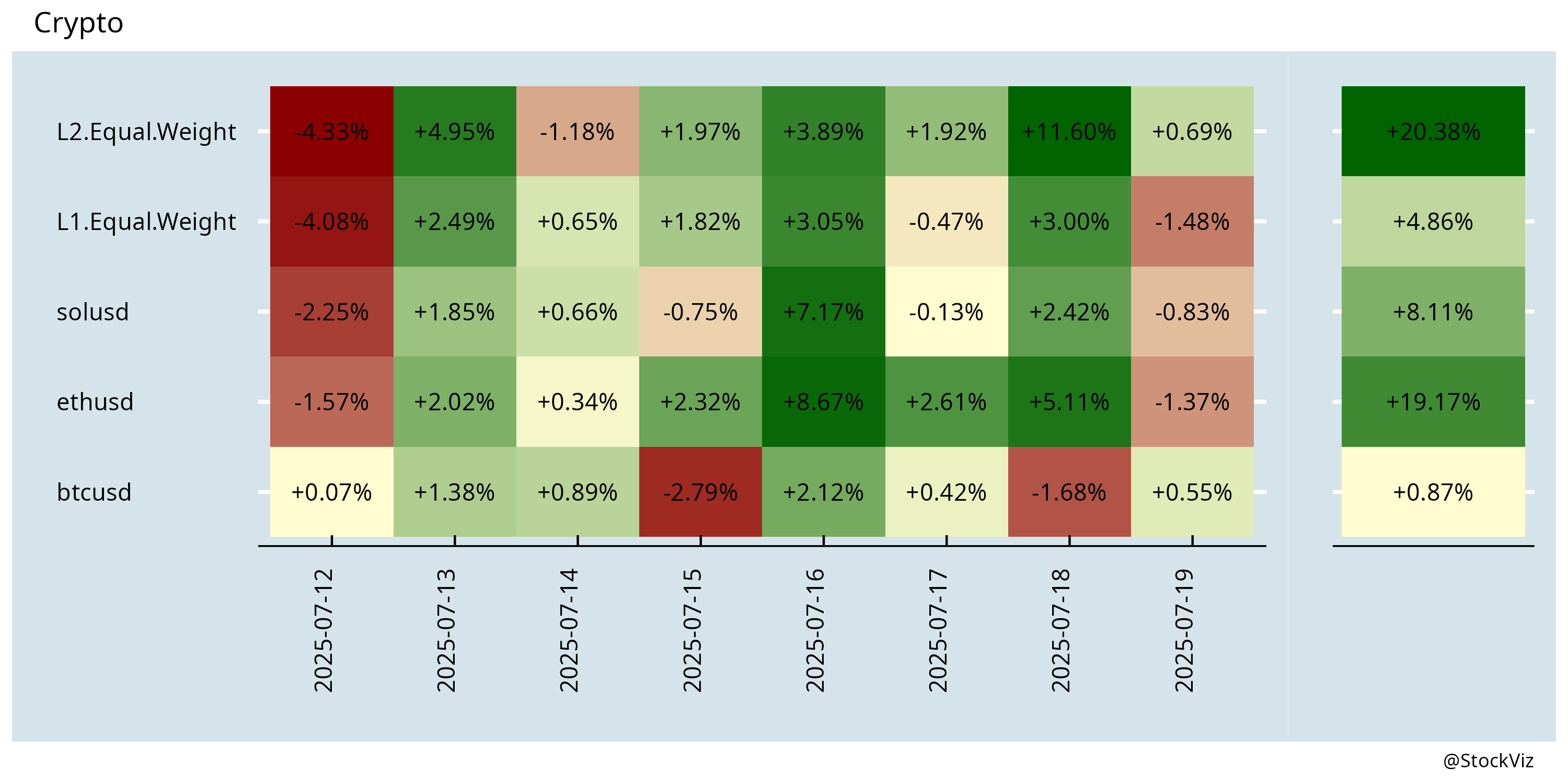
Some of you might prefer the recap as a video:
Links
Research
Buffett’s Intangible Moats (sparklinecapital)
Warren Buffett is often mischaracterized as an old-school value investor in the mold of Ben Graham. In reality, he long ago evolved beyond Graham’s focus on tangible book value – instead favoring asset-light businesses with wide intangible moats (e.g., Coca-Cola and Apple). Buffett’s long-term success is largely driven by systematic exposure to two key factors: Intangible Value and Quality. While there will never be another Buffett, his philosophy can be distilled into a simple, rules-based strategy – one that can be implemented using long-only factor building blocks and applied across a broader opportunity set than Berkshire itself can access today.
The Cross-Section of Stock Returns Around the World in the Early Twentieth Century (OUP)
We study nine equity markets between 1900 and 1925 to provide an out-of-sample test of some major asset pricing anomalies during a period in which anomalies had not been documented. We find strong evidence of momentum in almost every market. We find no evidence of long-term reversals, which, coupled with the limited presence of institutional investors, suggests that underreaction should be considered as a key aspect of behavioral theories of momentum.
Stablecoins and the US Treasury Market (SSRN)
Both are becoming more fully connected, such that future spillovers from the Treasury market directly impact digital dollar payment mechanisms – while the default risk of stablecoin issuers creates disruptive potential for the seeming invincibility of the US Treasury market.
India
After achieving 20% ethanol blending in petrol, the govt is likely to increase the target to 27% (timesofindia). Your car engine is designed to run on petrol, not alcohol. This is a gift in perpetuity to Indian carmakers and a permanent drain on consumers who pay more than 100% in taxes on new cars.
Diverting food security rice stocks to ethanol production flies in the face of economics (livemint).
A slump in India's retail inflation to six-year lows and a likely drop to a record low in July is prompting calls for at least one more interest rate cut this year, with many analysts saying the sharp disinflation is also a sign of weakening demand (reuters).
Small vendors who once favoured UPI payments are now urging customers to pay in cash, citing pressure from tax authorities (timesofindia, moneycontrol).
row
The Blitzhire Acquisition - on how to do an end run around anti-monopoly laws (villispeaks, danco)
US AI capex is so big that it's affecting economic statistics, boosting the economy, and beginning to approach the railroad boom (paulkedrosky).
Delta moves toward eliminating set prices in favor of AI that determines how much you personally will pay for a ticket (fortune).
The ‘Trump Pump’: How Crypto Lobbying Won Over a President (nytimes)
Young Americans today spend 70% less time attending or hosting parties than they did at the beginning of the 21st century (derekthompson)
China continues huge investments in wind and solar power, reportedly accounting for 74% of all projects now under construction worldwide (theatlantic).
The biotechnology industry is experiencing a tectonic shift, driven by Chinese drugmakers (bloomberg).

AI is killing the web (economist).
Odds & Ends
Typically, underwriters rely on a handful of key health metrics like HbA1c, cholesterol, blood pressure, and BMI to calculate your risk of dying earlier than expected (and thus costing them money). Those same four metrics are exactly what GLP‑1s improve. Not just a little, but enough to entirely shift someone's risk profile within at least 6 months of using them.
How GLP-1s Are Breaking Life Insurance (glp1digest)
The Emerging Problem of "AI Psychosis" (linkedin)
Researchers have been sneaking secret messages into their papers in an effort to trick artificial intelligence (AI) tools into giving them a positive peer-review report (nature).

Meme of the Week