When markets are strong, hedges are useless. Not only do you see the upfront drag on returns, your costs keep piling up as you adjust them. Besides, when you use a short index as a hedge, you open up a basis that never seem to go in your favor. Is it worth it?
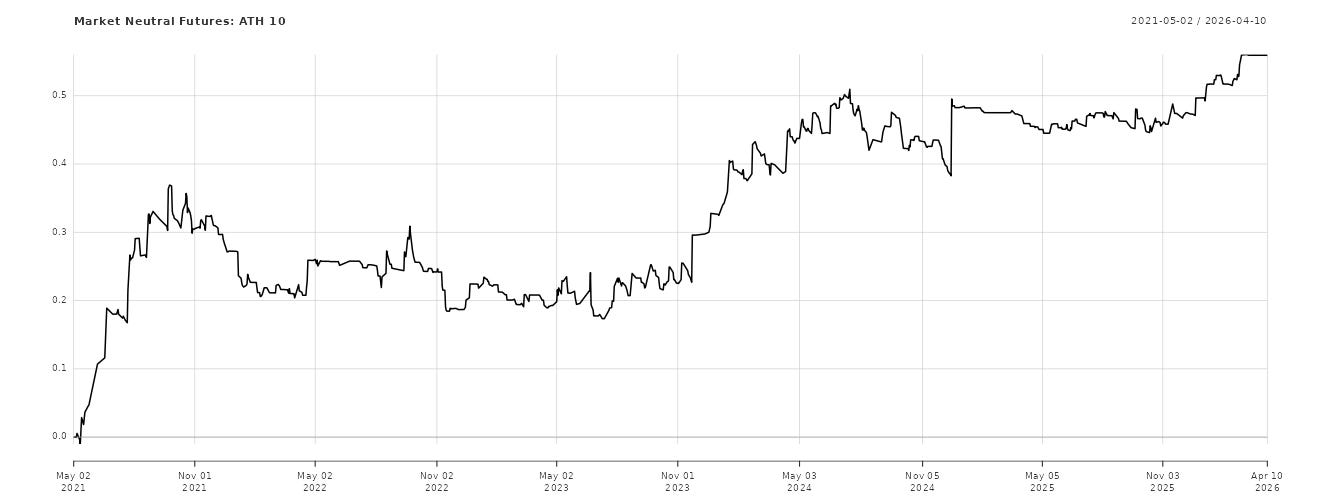
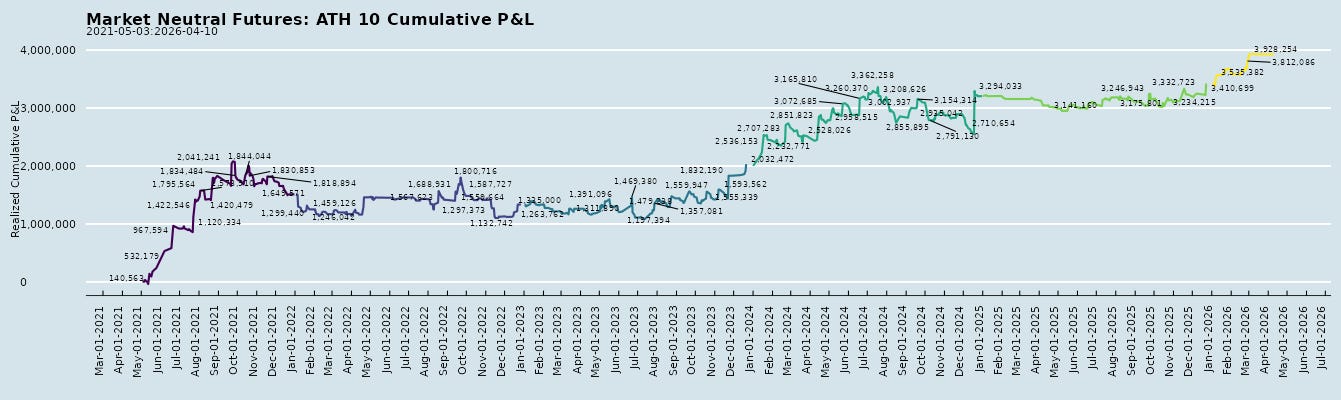
Compare the equity curve of the market neutral version of a 10-position All-Time-Highs momentum strategy…

… with that of the un-hedged one.
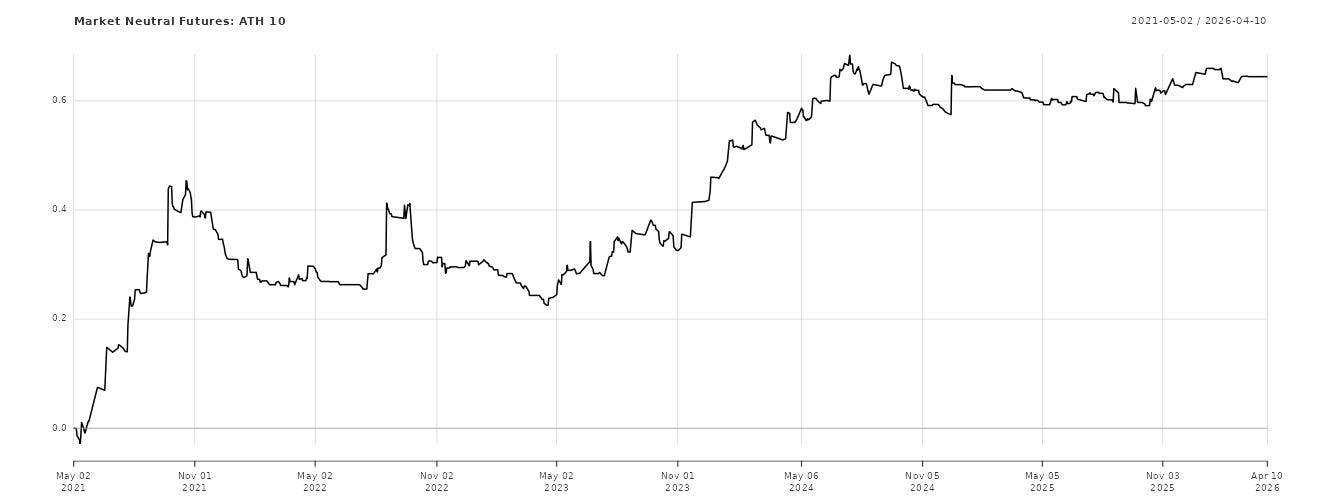

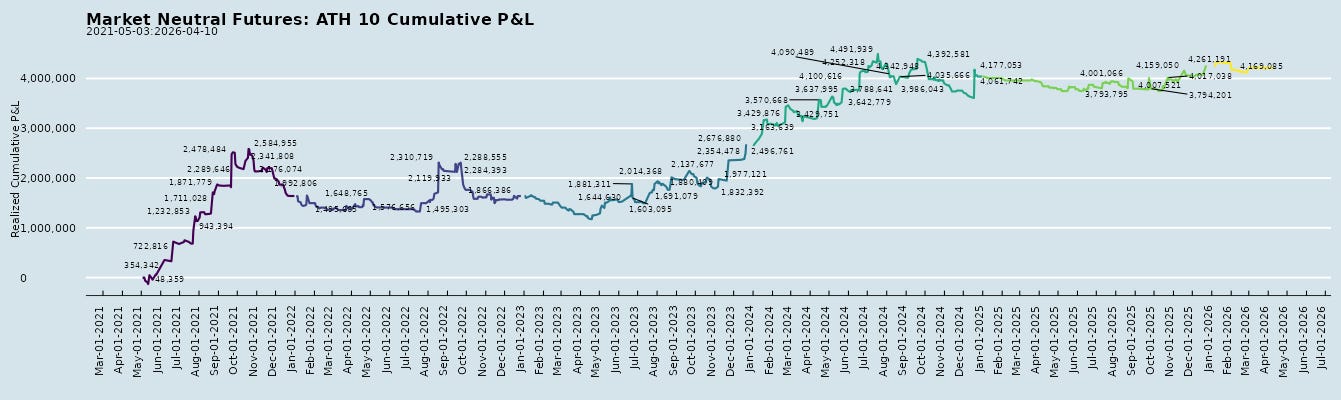
The difference is in the Sharpe. Over the last 5 years, the hedged version has a 1.08 Sharpe - almost twice that of the un-hedged version’s 0.56. This difference matters for levered strategies. And the overall give-up in P&L is less than Rs. 3 lakhs over the entire period.
During down turns, its the liquidation of these hedges that are the counterparty to index sellers.
Unfortunately, with anti-market zealots running the show, costs and margin requirements of running such strategies have ballooned. Without hedges, long-only strategies will sell into the fall - exacerbating volatility.
As the volatility of an asset increases, its allocation within your portfolio should decrease. So, at a macro level, all that our brain-trust has managed to do is ensure a lower allocation to Indian equities by making it more expensive to hedge.
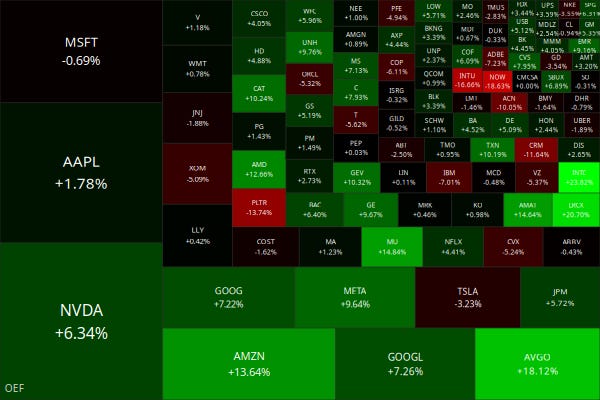
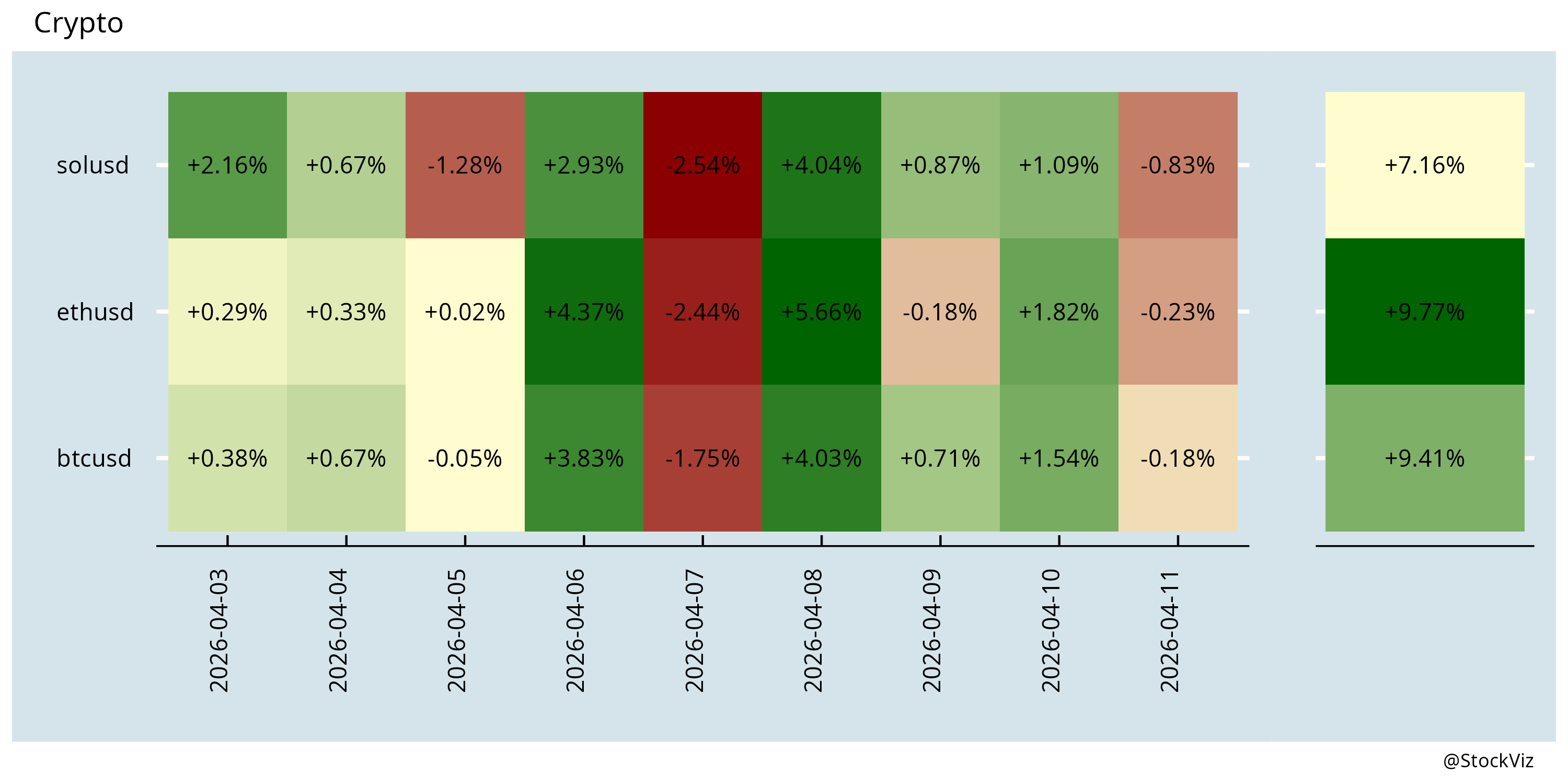
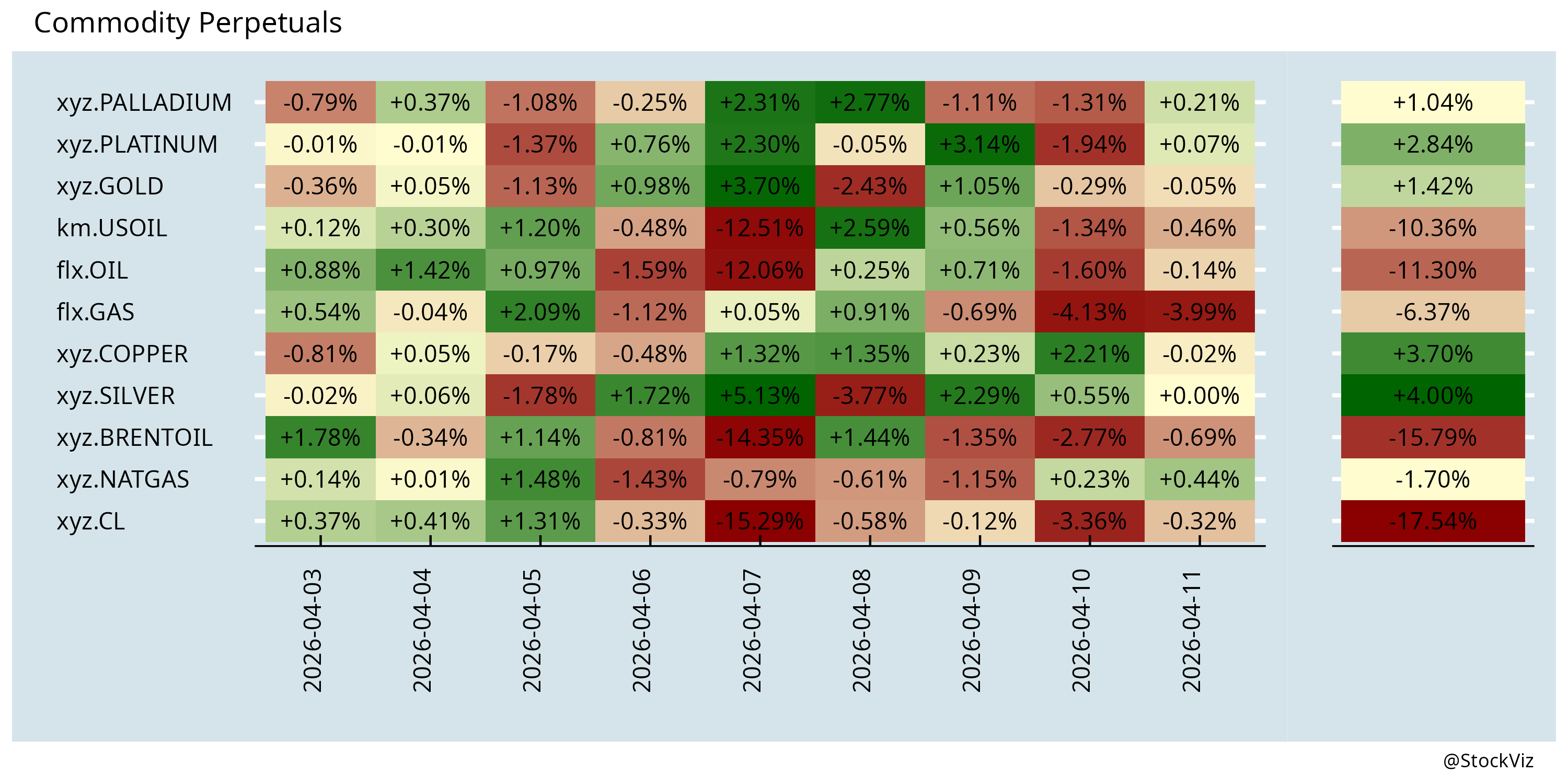
Markets this Week
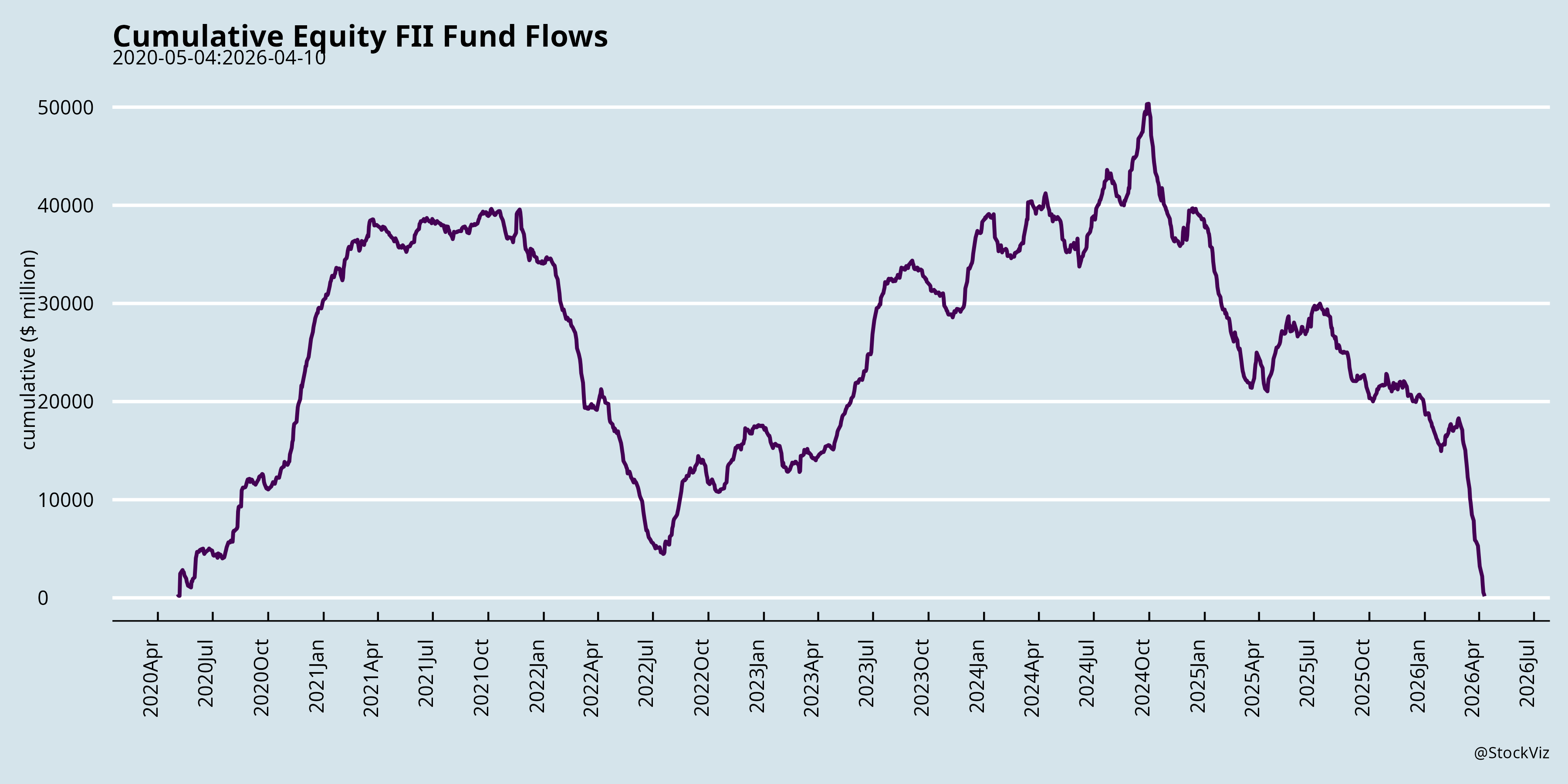
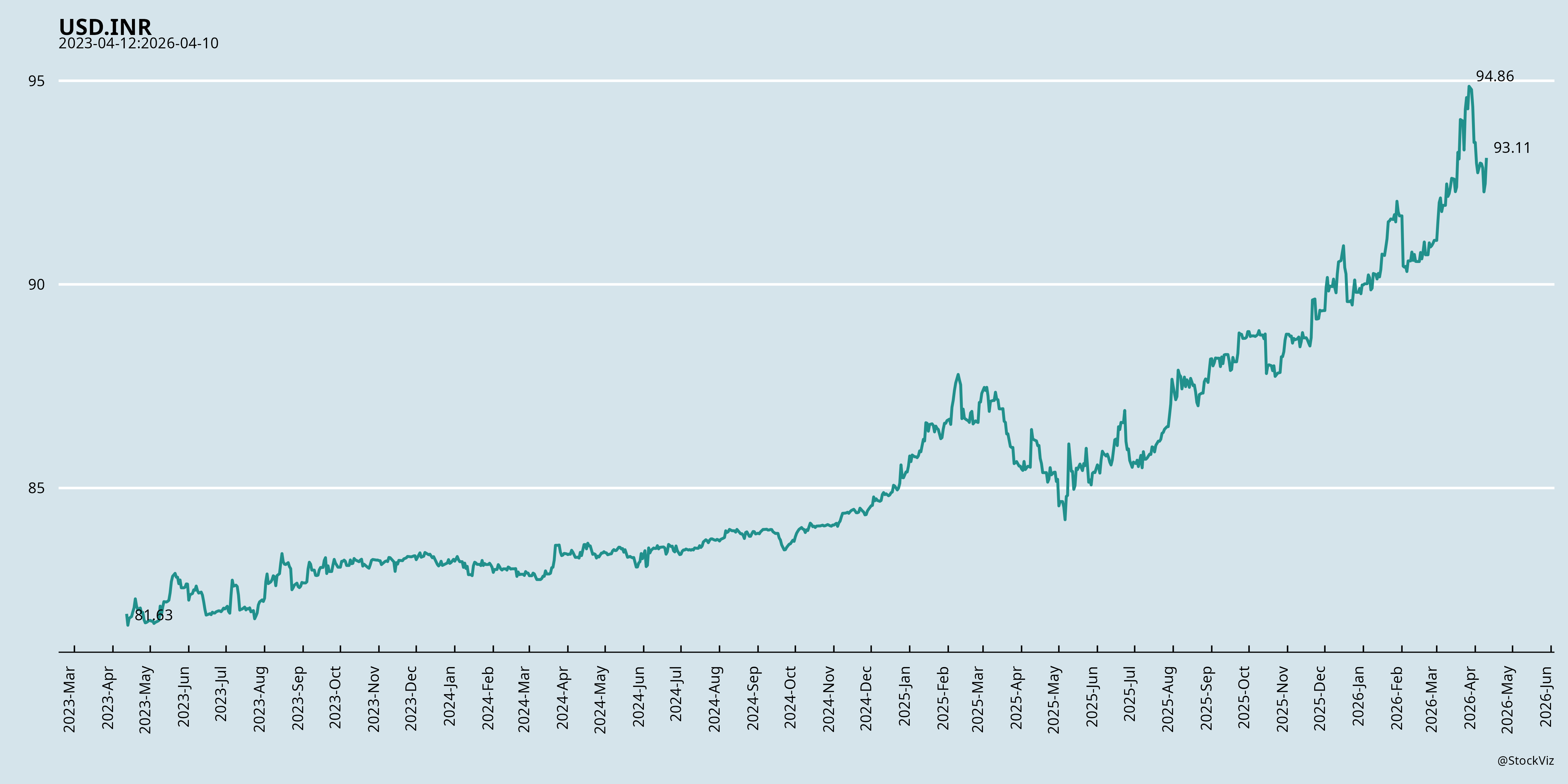
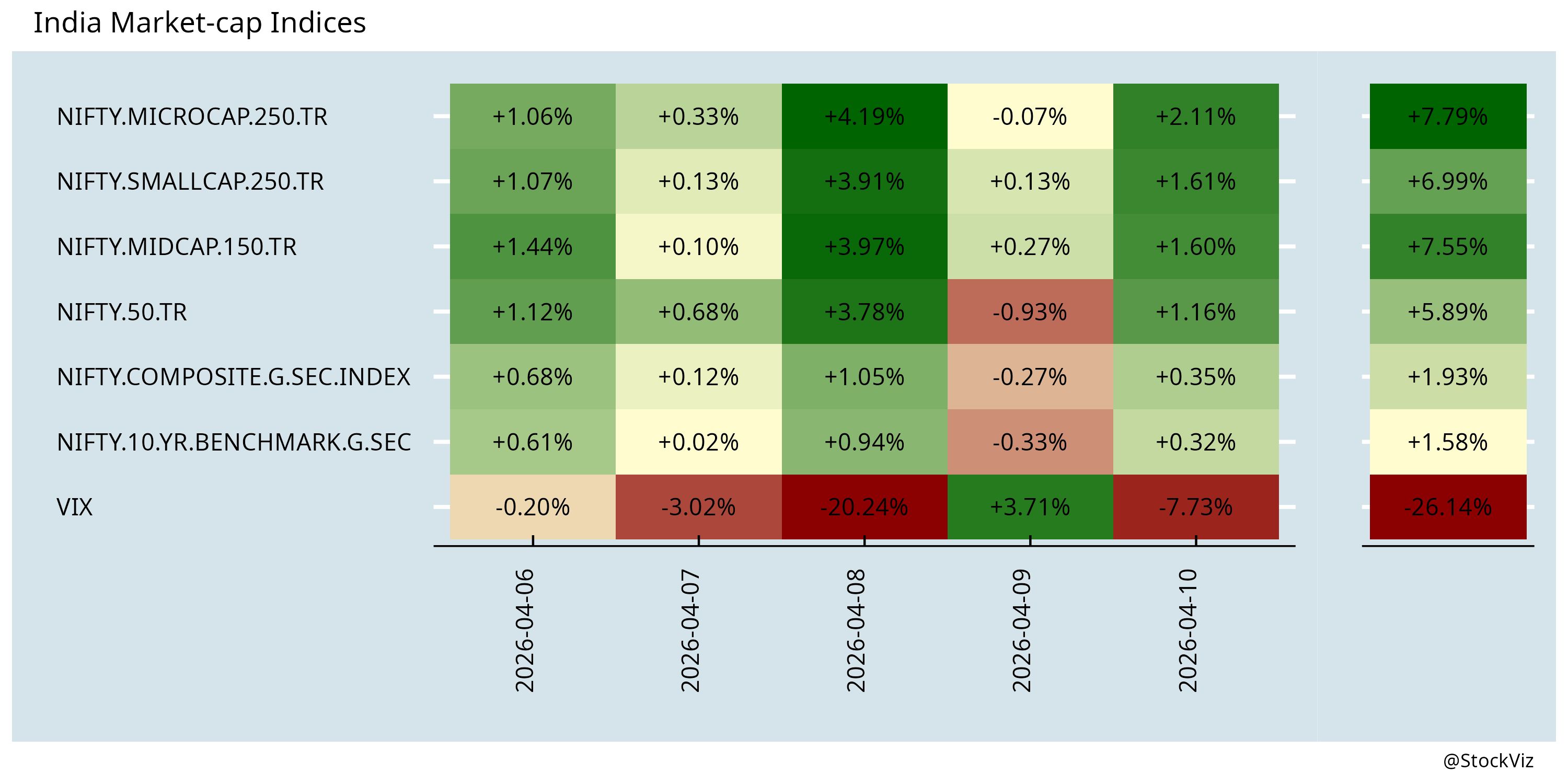
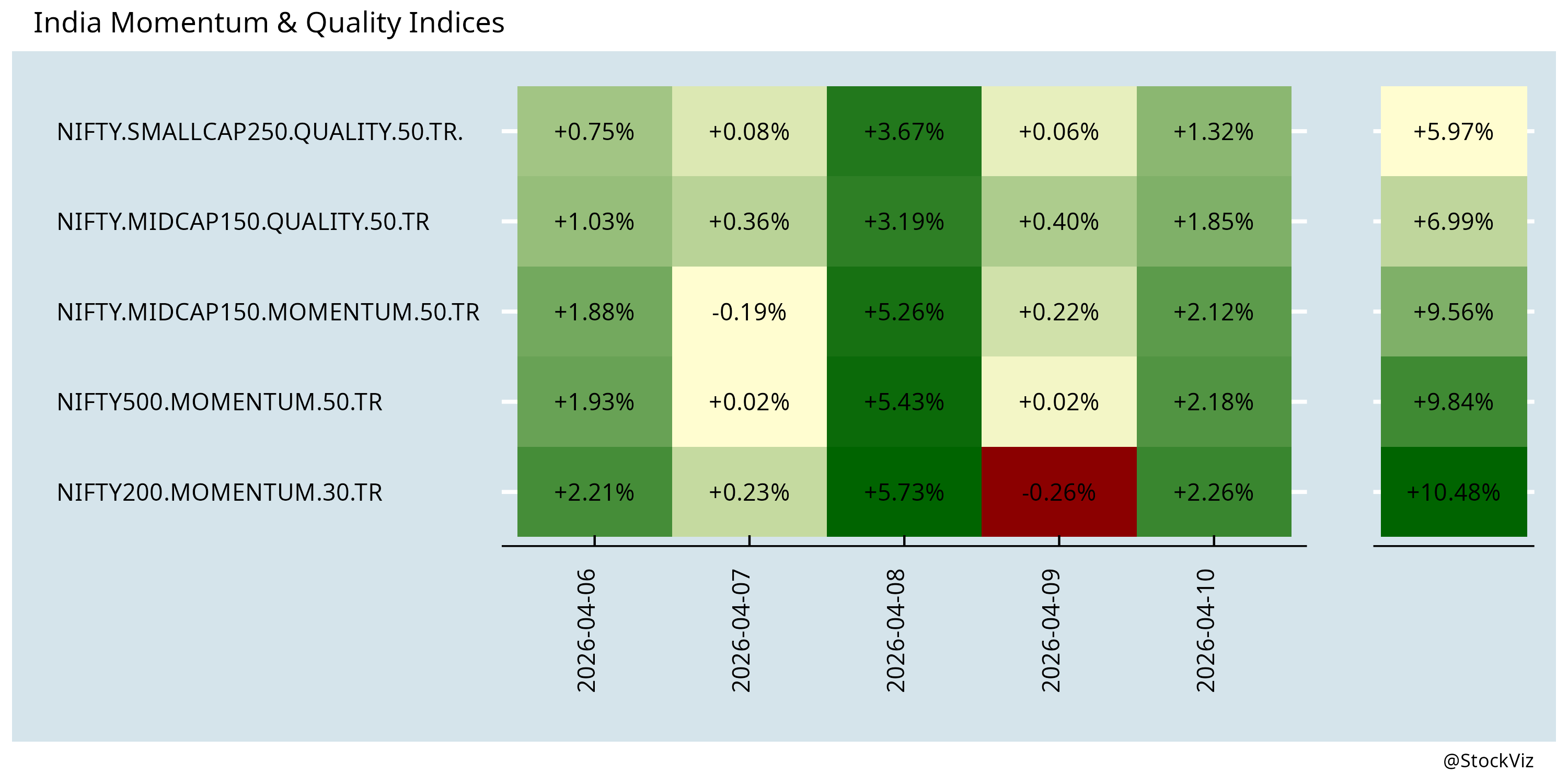
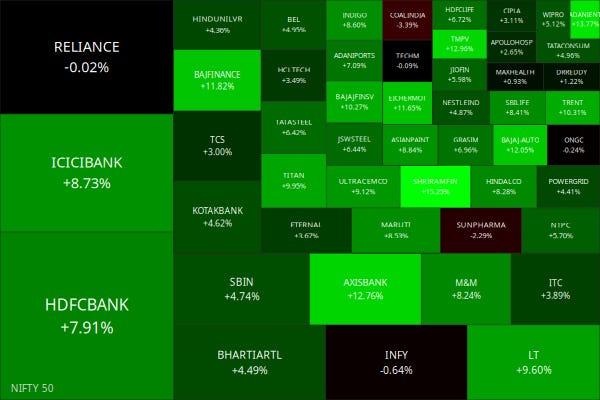
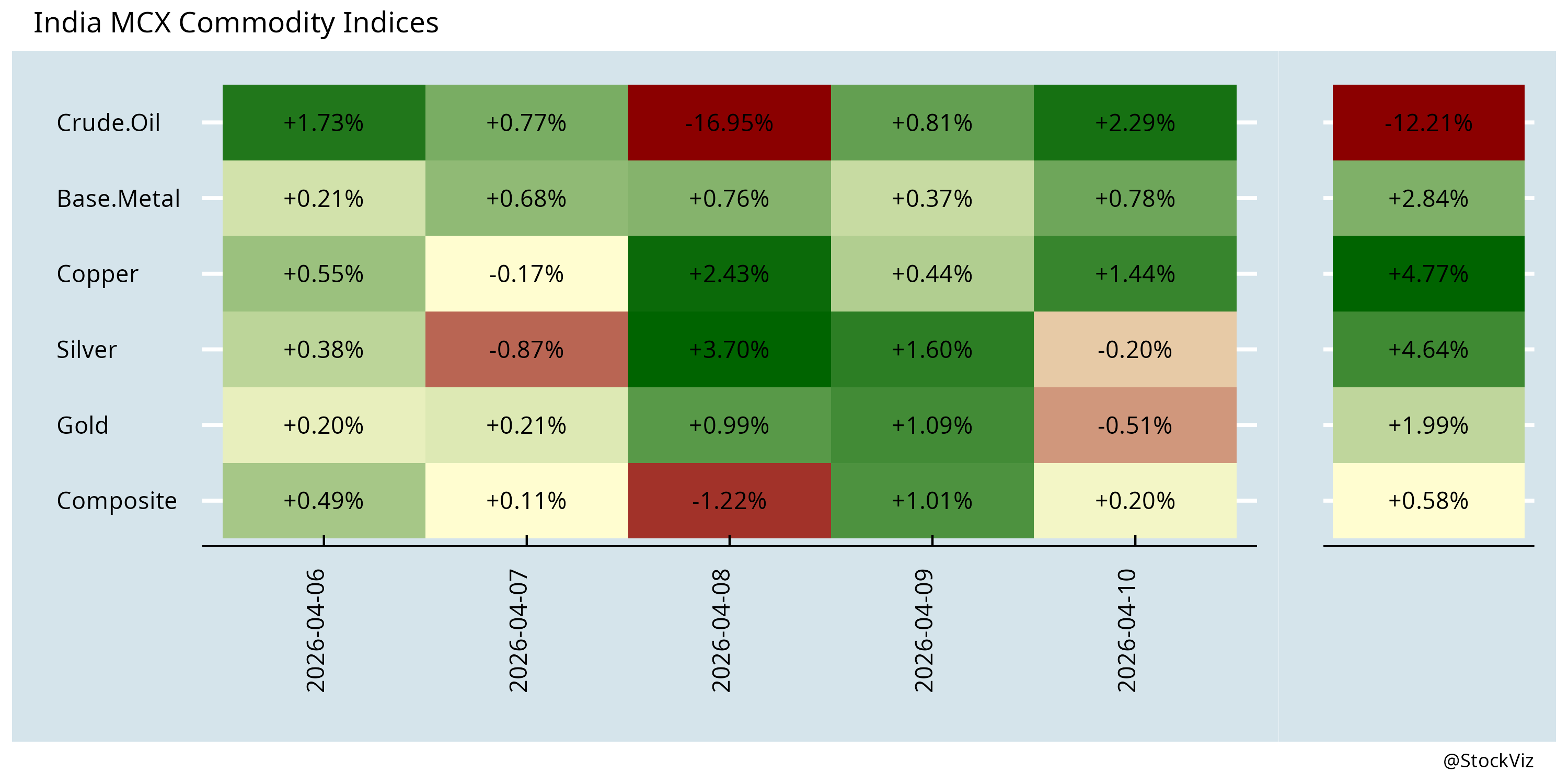
More here: country ETFs, fixed income, currencies and commodities.
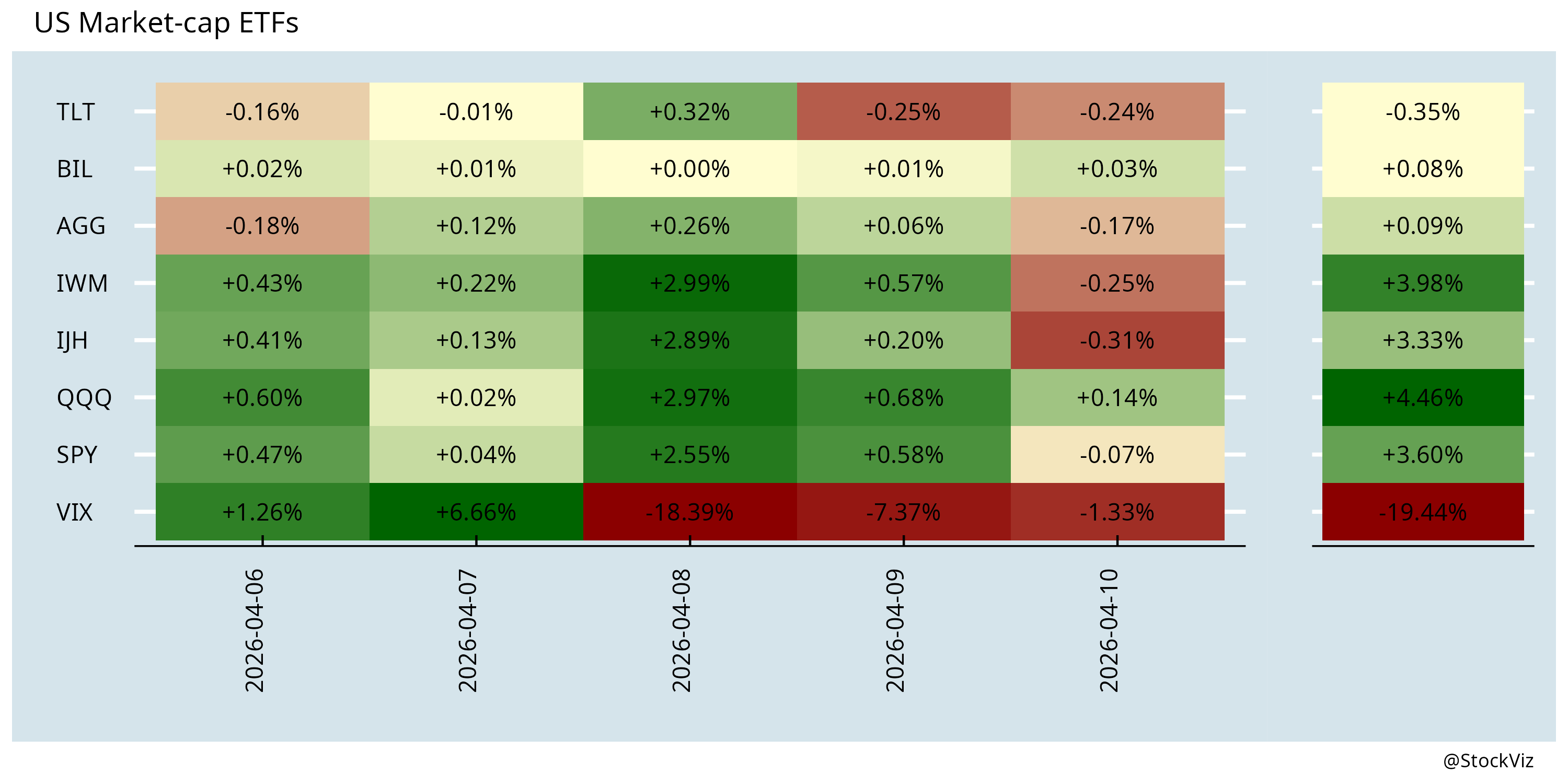
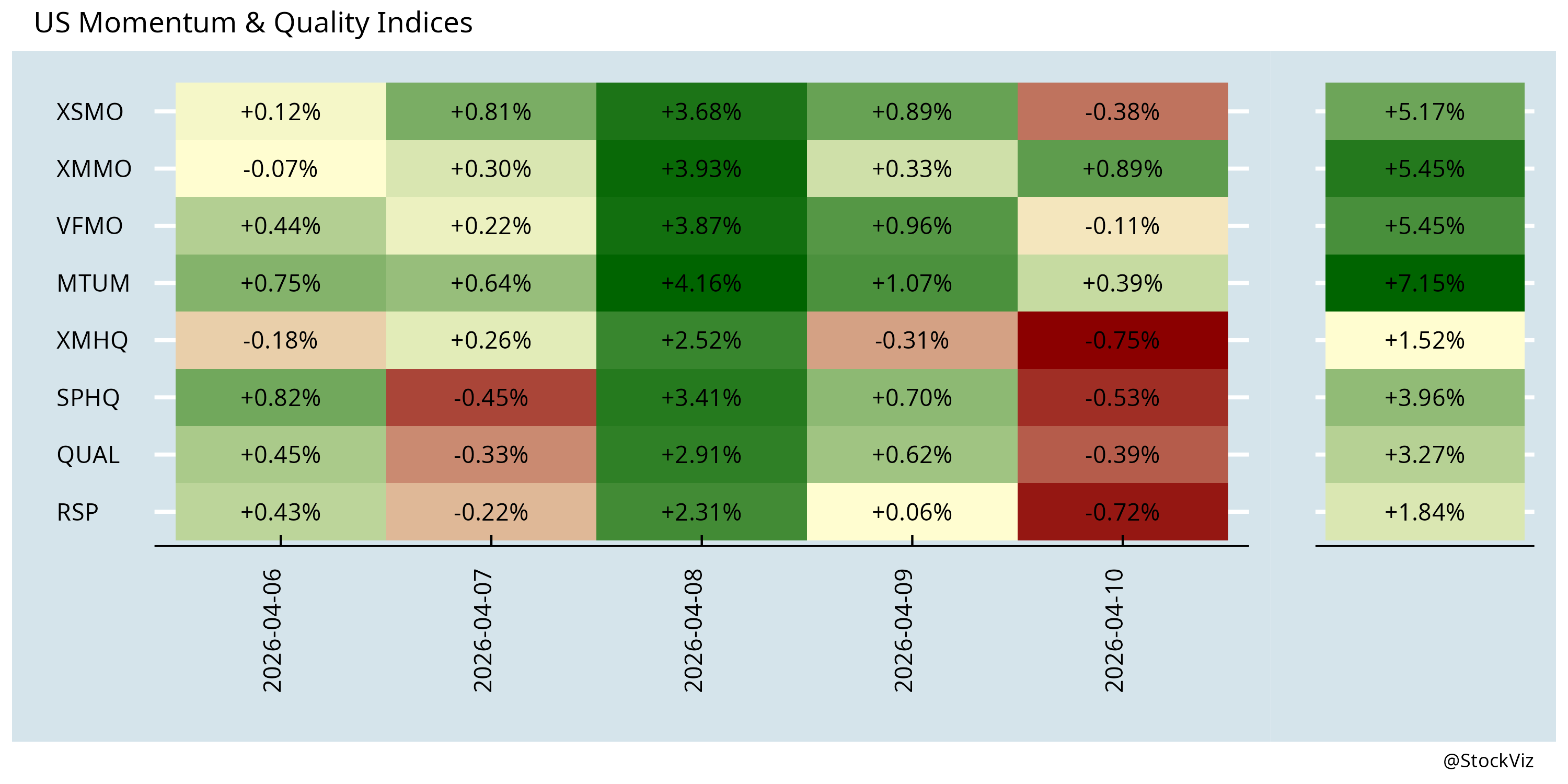
Links
Canal mania collapsed in 1837. Railroad overbuilding fueled the panics of 1873 and 1893. Turn-of-the-century electrification saw speculative excess in utility holding companies. The 1990s dot-com boom went bust. Yet in each instance, business productivity eventually surged, living standards climbed, and the prophets of permanent technological unemployment turned out to be wrong. Workers got reallocated, not eliminated. And while what those workers did changed shape, work itself didn’t disappear (aei).
Research
Factor MAX: A New Signal for Predicting Factor Returns (AA, SSRN)
The study investigated whether the maximum daily return a factor experiences within a month contains valuable information about that factor’s future performance. Unlike traditional predictors like factor momentum (which looks at cumulative performance over recent periods), factor MAX isolates a single data point: the highest daily return a factor achieves in a given month. Factors with the highest maximum daily returns significantly outperformed those with the lowest maximum returns.
The Private Returns to Public Office (uchicago)
We study the wealth accumulation of Indian state politicians using public disclosures required of all candidates. The annual asset growth of winners is 3–5 percent higher than that of runners-up, a difference that holds also in a set of close elections. The relative asset growth of winners is greater in more corrupt states and for those holding ministerial positions.
A Theory of Falling Growth and Rising Rents (NBER)
Growth has fallen in the U.S., while firm concentration and profits have risen. Meanwhile, labor’s share of national income is down, mostly due to the rising market share of low labor share firms. We propose a theory for these trends in which the driving force is falling firm-level costs of spanning multiple markets, perhaps due to accelerating IT advances. In response, the most efficient firms (with higher markups) spread into new markets, thereby generating a temporary burst of growth. Because their efficiency is difficult to imitate, less efficient firms find markets more difficult to enter profitably and therefore innovate less. Eventually, due to greater competition from efficient firms, within-firm markups actually fall. Despite the increase in the aggregate markup and rents, firm incentives to innovate decline—lowering the long run growth rate.
India
India’s real estate sector is facing a shortage of skilled workers and rising labour costs as soaring cooking gas prices push migrant workers back home (livemint).
India's services sector grew at its weakest pace in 14 months in March as the Middle East war dampened domestic demand (reuters).
Bill seeking 33% reservation for women in the Lok Sabha and State Assemblies will be tabled when the Budget Session reconvenes on April 16 (thehindu). The number of seats in LS will rise by 50% to 816 from the existing 543, with the 273-seat increase set aside for women, ensuring that the existing political dynamics and incumbent parliamentarians, overwhelmingly male, are not cut loose as a reshaped order takes hold (timesofindia).
India demonstrates 1,000-kilometer fiber-based Quantum Key Distribution (QKD) network. It uses QKD to create secure encryption keys for data transmission. Any intrusion attempt triggers a change in quantum states, enabling detection and ensuring "unhackable" security (pib).
India’s Prototype Fast Breeder Reactor achieved first criticality. The achievement is crucial because India has little uranium, which is an essential fuel for nuclear reactors. However, the self-sustaining technology will help India use thorium. The country has some of the world's largest thorium reserves (indiatoday).
State Bank of India had about $5 billion of bets against the rupee that were impacted by the RBI’s crackdown on speculators. It is estimating losses of about $32 million from the forced unwinding of these trades (bloomberg).
row
The Strait of Hormuz is not closed. It has been converted. Before February 28, Hormuz was an open international waterway. Twenty percent of global oil, 30% of global fertilizer trade, and a fifth of global LNG transited daily under the principle of freedom of navigation. That system no longer exists (theomission26).
A third of the global trade in raw materials for fertiliser passes through Hormuz, which is also the route for 20% of shipments of natural gas, which is required to make it. The waterway’s near-total shipping blockade is a “food security timebomb” (theguardian).
High fuel costs forcing Philippine farmers to abandon harvests (reuters).
America’s adversaries are uniting as its own coalition falls apart (theatlantic).
Beijing has a stranglehold on the critical minerals the U.S. needs to rebuild its weapons cache following five weeks of war (politico).
Across the US, at least ten states are now exploring or have already passed an exit or wealth tax in order to combat revenue losses from residents fleeing to lower tax areas. That includes California, New York, Washington, and Michigan (komonews).
A hacker has allegedly breached one of China’s supercomputers and is attempting to sell a trove of stolen data (cnn).
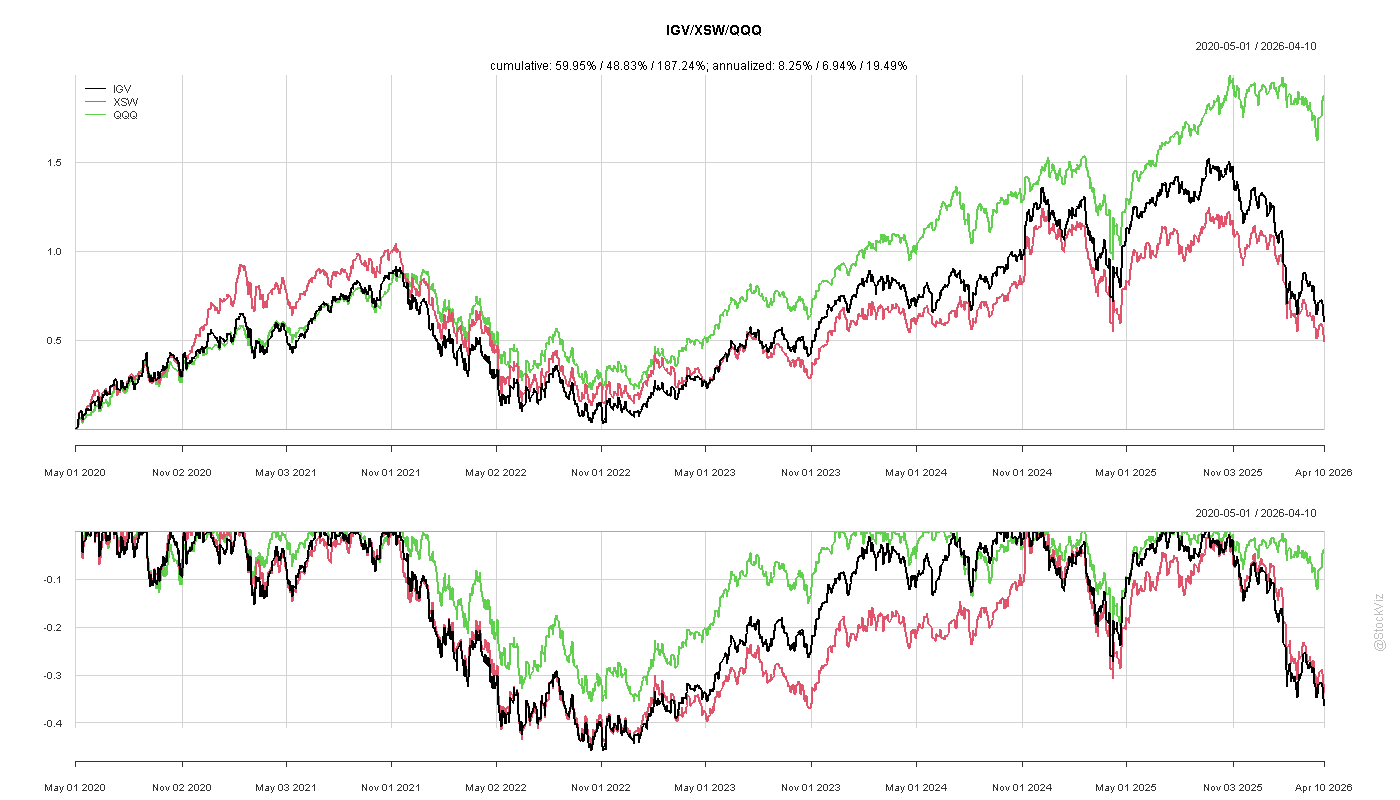
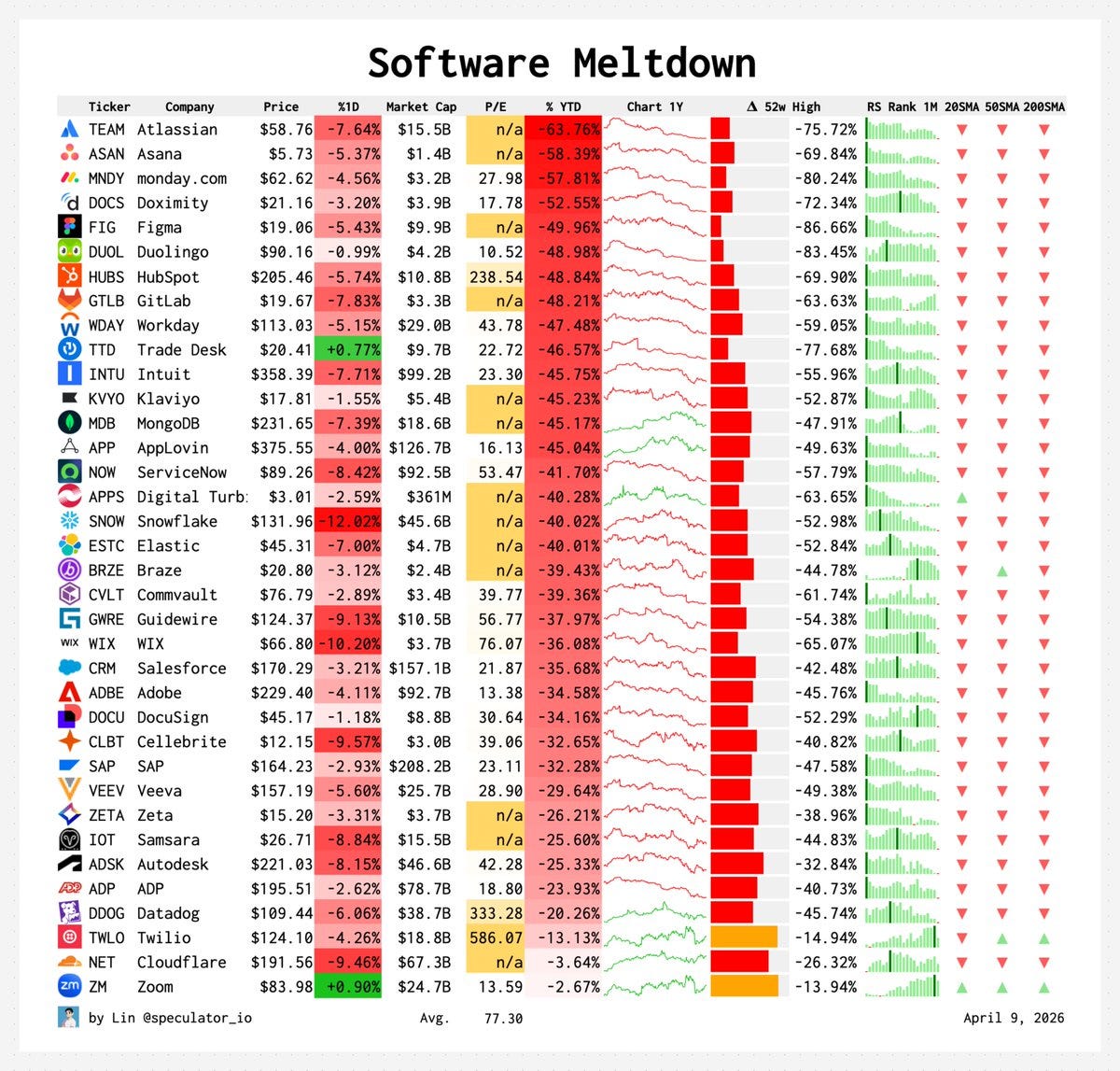
Software/SAAS stocks are down 35% since September last year. For context, they were at a 45% drawdown in late 2022 before they bottomed.
Japan’s mighty carmakers are in serious trouble (economist, motor1).
In Australia, electric trucks are now available "at price parity with diesel" (abc).
China’s acts of commercial harassment against Panama have sparked indignation across Latin America (thehill).
One in 8 American adults now takes a GLP-1 drug of some kind. The World Health Organization has added GLP-1 drugs to its essential medicines list. Ozempic just got cheap enough to change the world (vox).
Businesses are raking in big money by frustrating customers. It’s costing Americans $165 billion in lost time (businessinsider).
Argentina’s free market experiment: the poverty rate fell to 28% from 53% over two years (washingtonpost).
Meme of the Week