Typically, commodities are in contango: the forward curve slopes upward, meaning prices for future delivery are higher than the current spot price. This is because of the cost of storage, insurance, and financing.
For example, here are the futures curve on different days for NYMEX Gold:
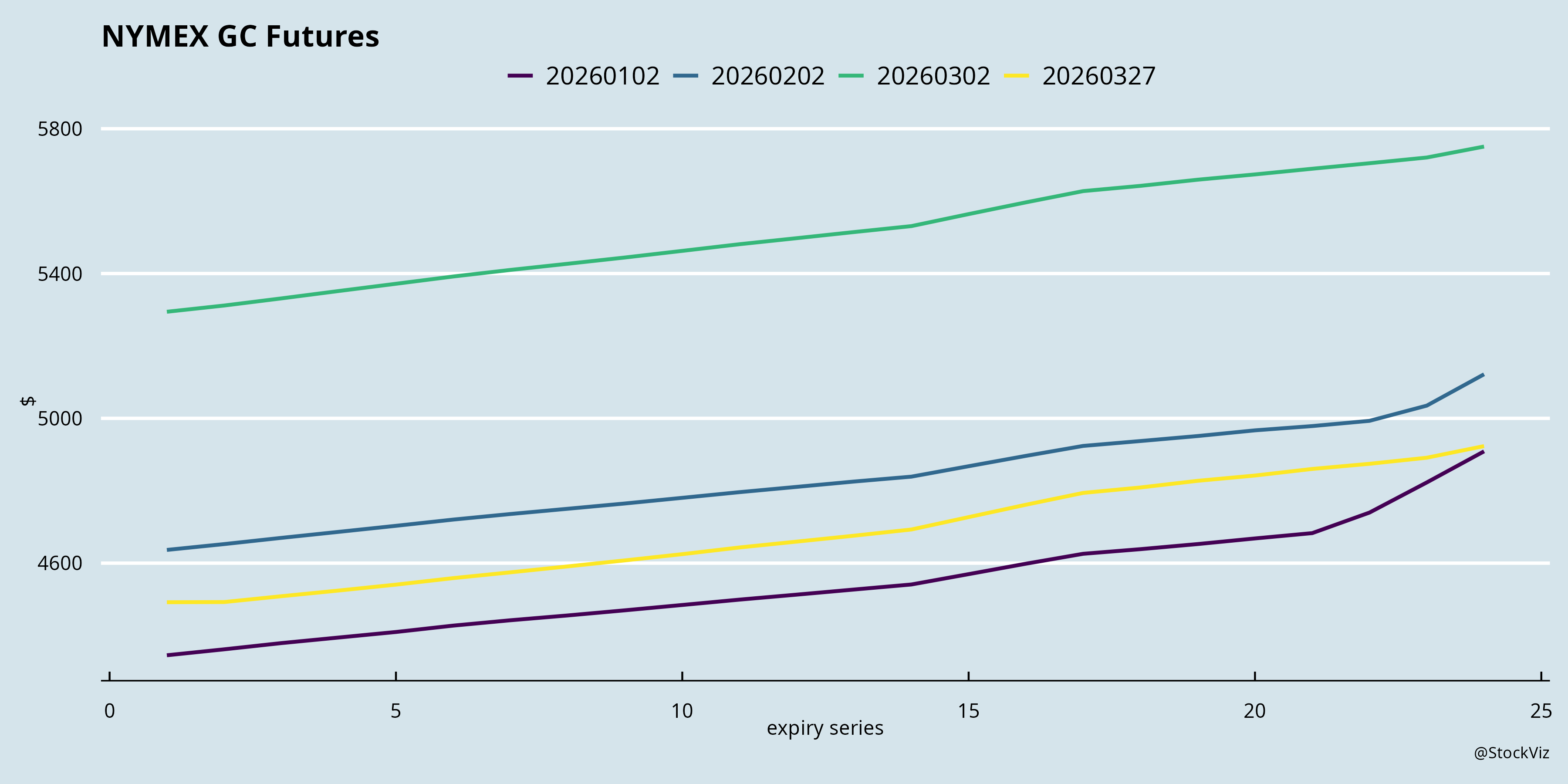
Normally, the entire complex shifts in parallel.
However, we live in abnormal times. Look at oil (WTI, NYMEX CL):
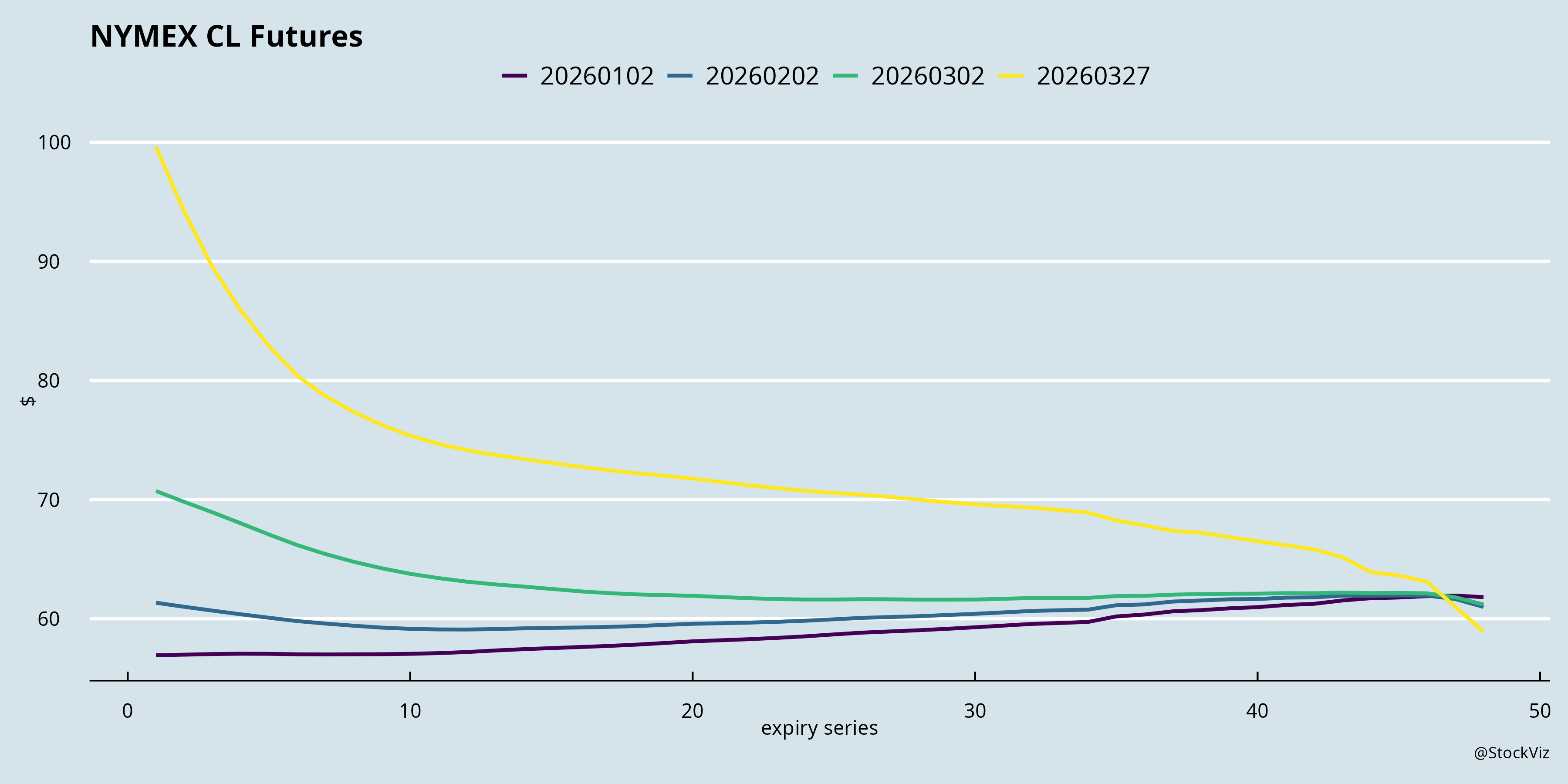
What was in contango before is now in backwardation. Thanks to the US-Iran War, people are willing to pay a premium for delivery now vs. delivery later.
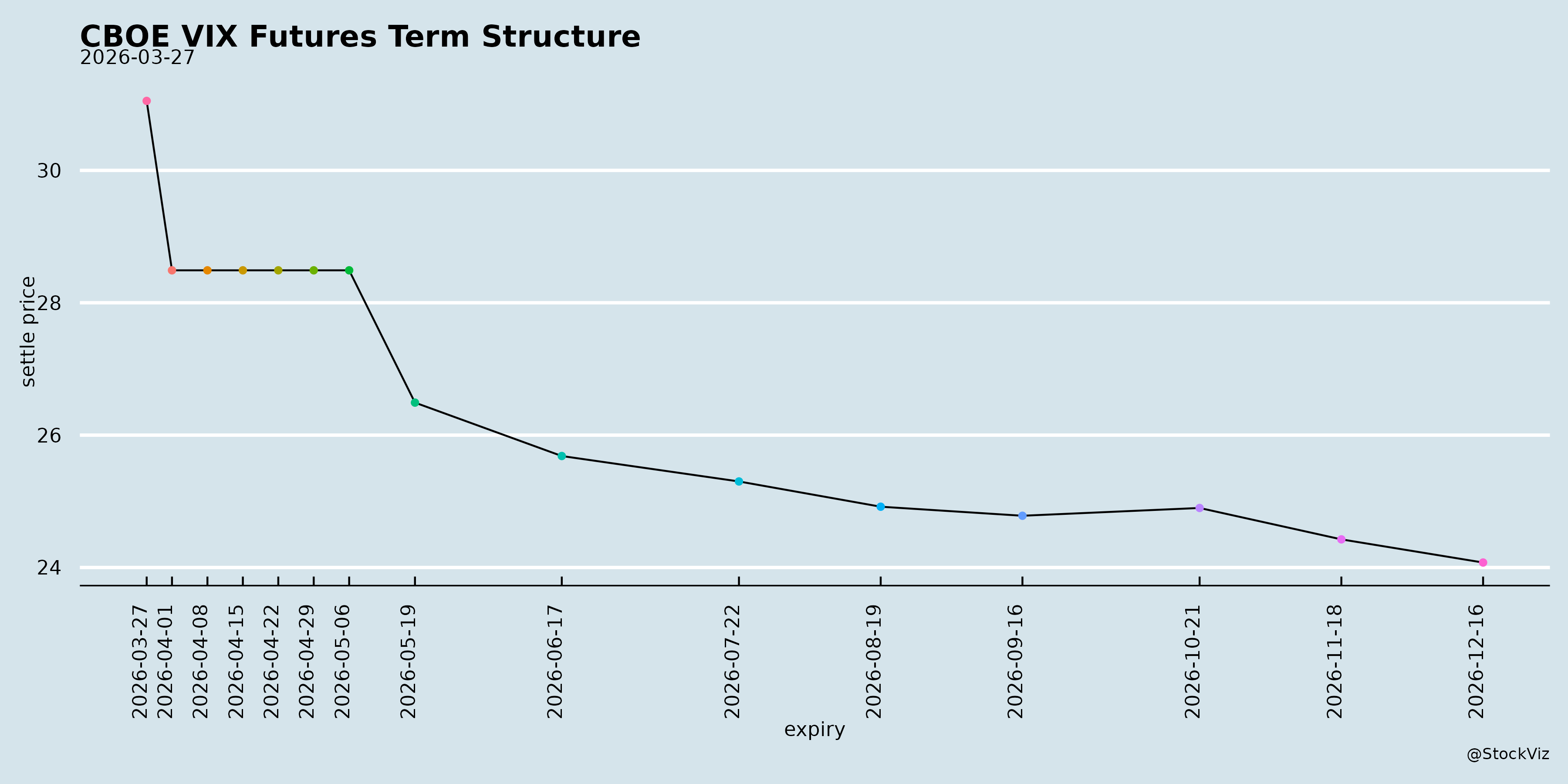
The same thing has happened in the VIX complex as well. Here’s the current term-structure:
vs. historical:
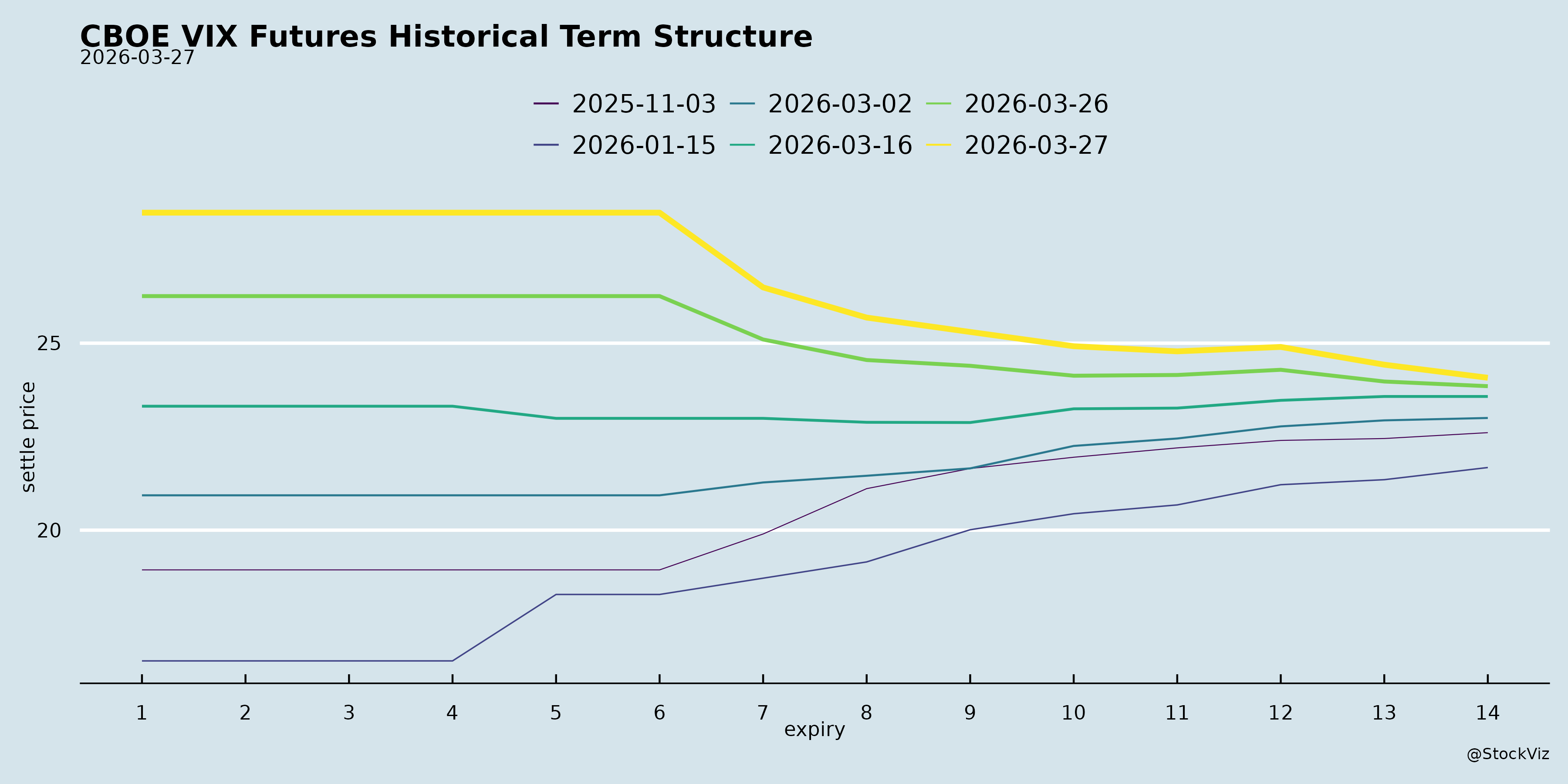
Demand for protection now is more expensive than demand for protection later.
Contango vs. backwardation tells you something about how the market perceives future demand/supply vs. now.
Also, if you are a commodities ETF enjoyer, then the shape of the curve matters.
When you roll contracts in contango, you sell expiring contracts and buy new ones at a higher price. This negative roll yield results in the ETF returns lagging spot market returns. Also, over time, the higher-priced futures contract typically trends down to meet the lower spot price at maturity, causing a loss for those holding long positions.
Recently, HDFC AMC announced that their gold ETF will invest in gold futures (up to 50% of the fund) to manage temporary shortages of physical gold. This triggered a lot of commentary from investors who treated it as a betrayal of trust. The AMC later clarified that
investment in ETCDs will only be considered in rare circumstances where the Scheme is unable to buy or sell physical gold due to temporary scarcity of physical gold. Once the market normalizes and the Scheme can buy or sell physical gold per its requirements, the corresponding ETCDs are expected to be unwound.
The Scheme does not intend to use ETCDs as part of the scheme’s day-to-day strategy. The core approach of the Scheme remains unchanged – Scheme assets will be deployed in physical gold to the maximum extent possible, and the balance will be in cash or net current assets, as per the Scheme’s Asset Allocation.
Which is good. In a normal market, with gold in contango, buying futures and rolling them would’ve lost them money. However, in a stressed spot market, with gold in backwardation, buying futures should be OK.
Hopefully, they make the right call.
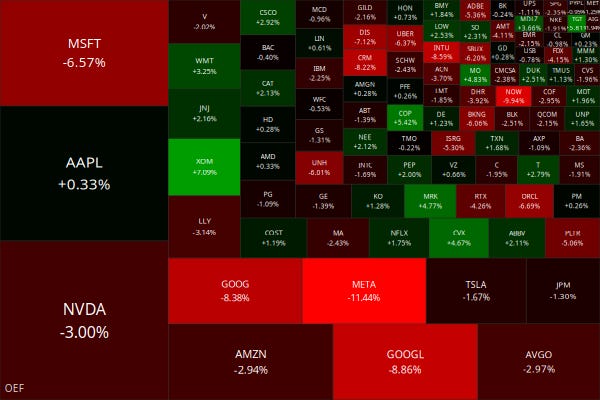
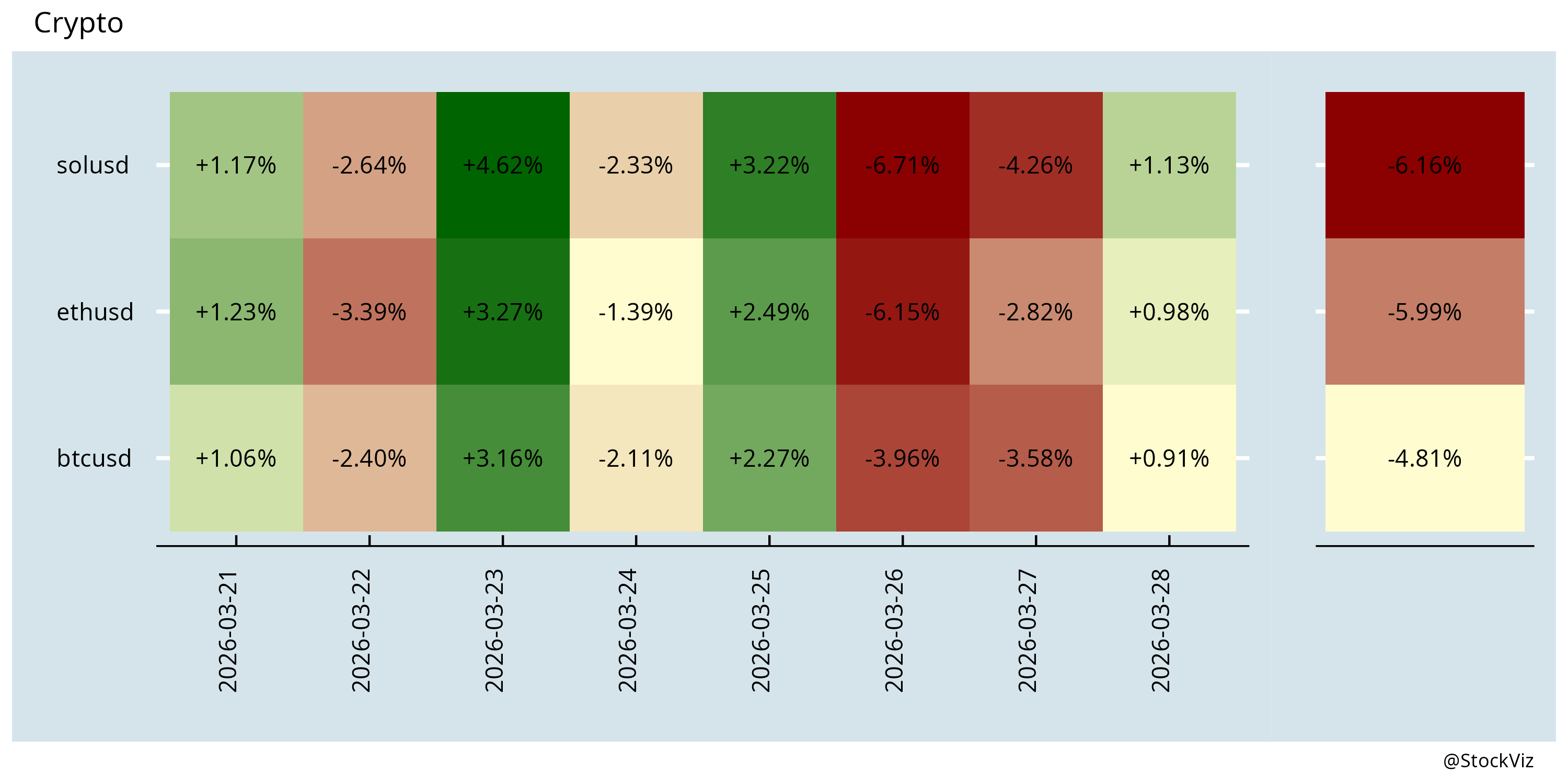
Markets this Week
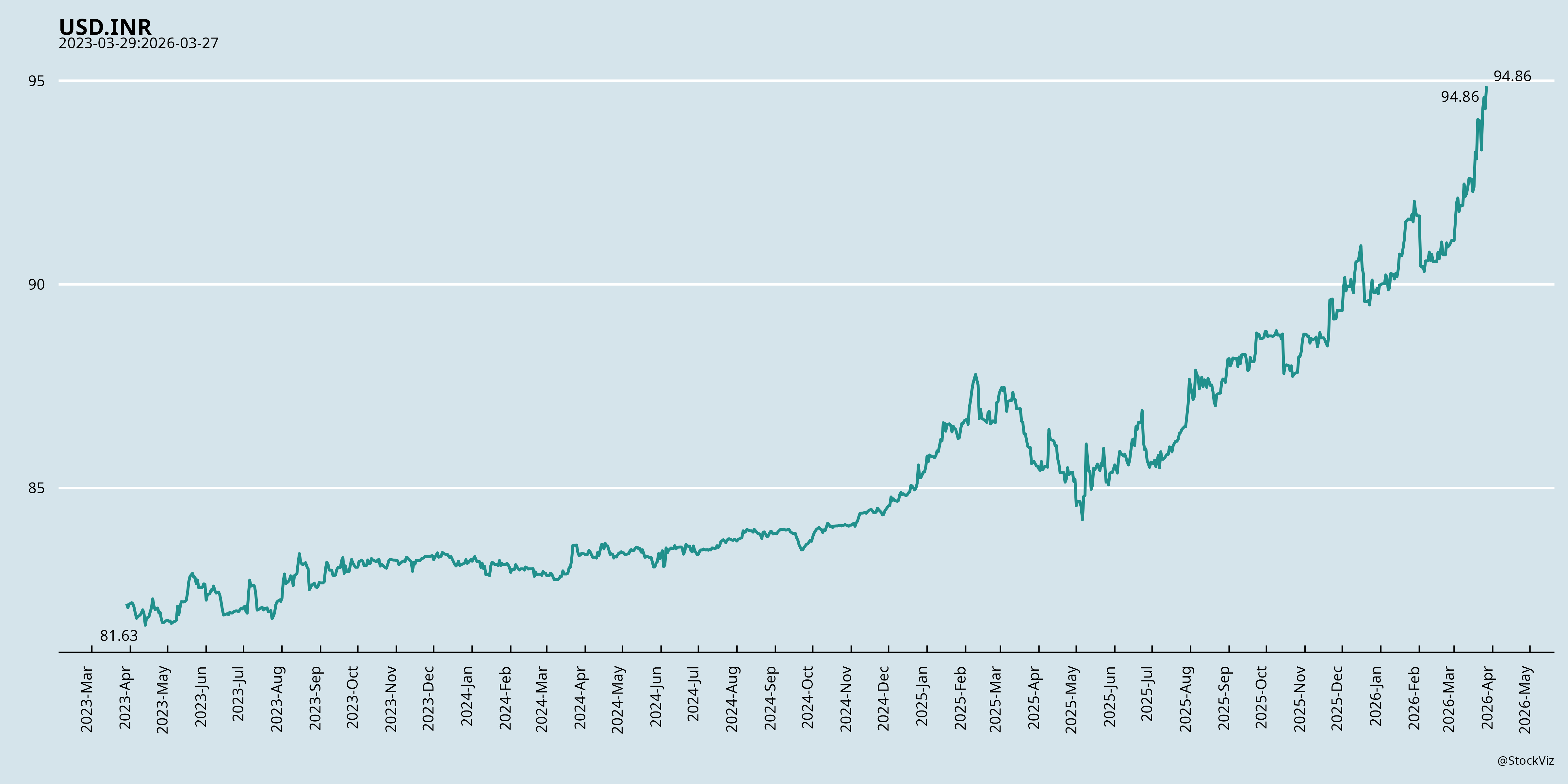
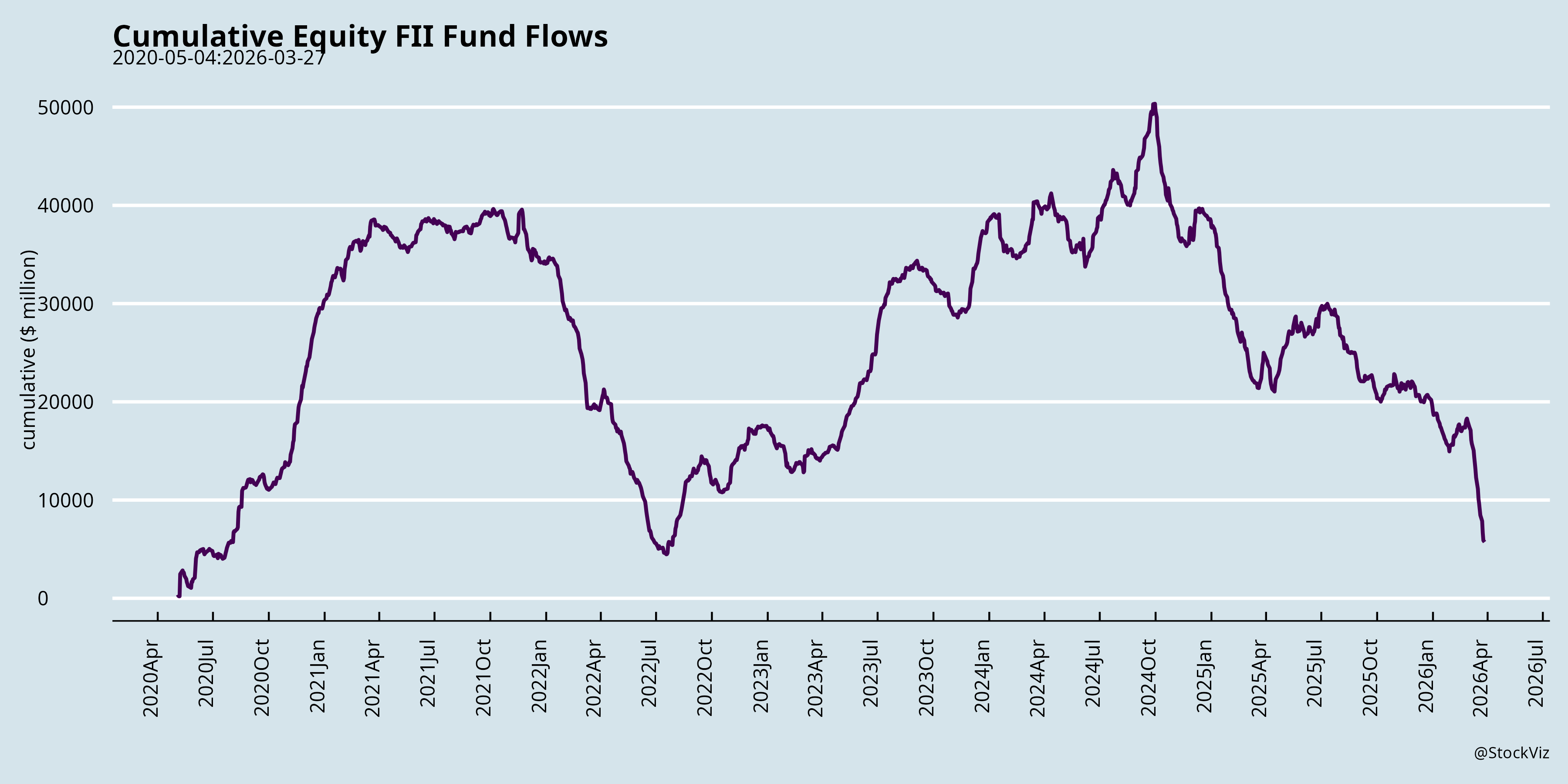
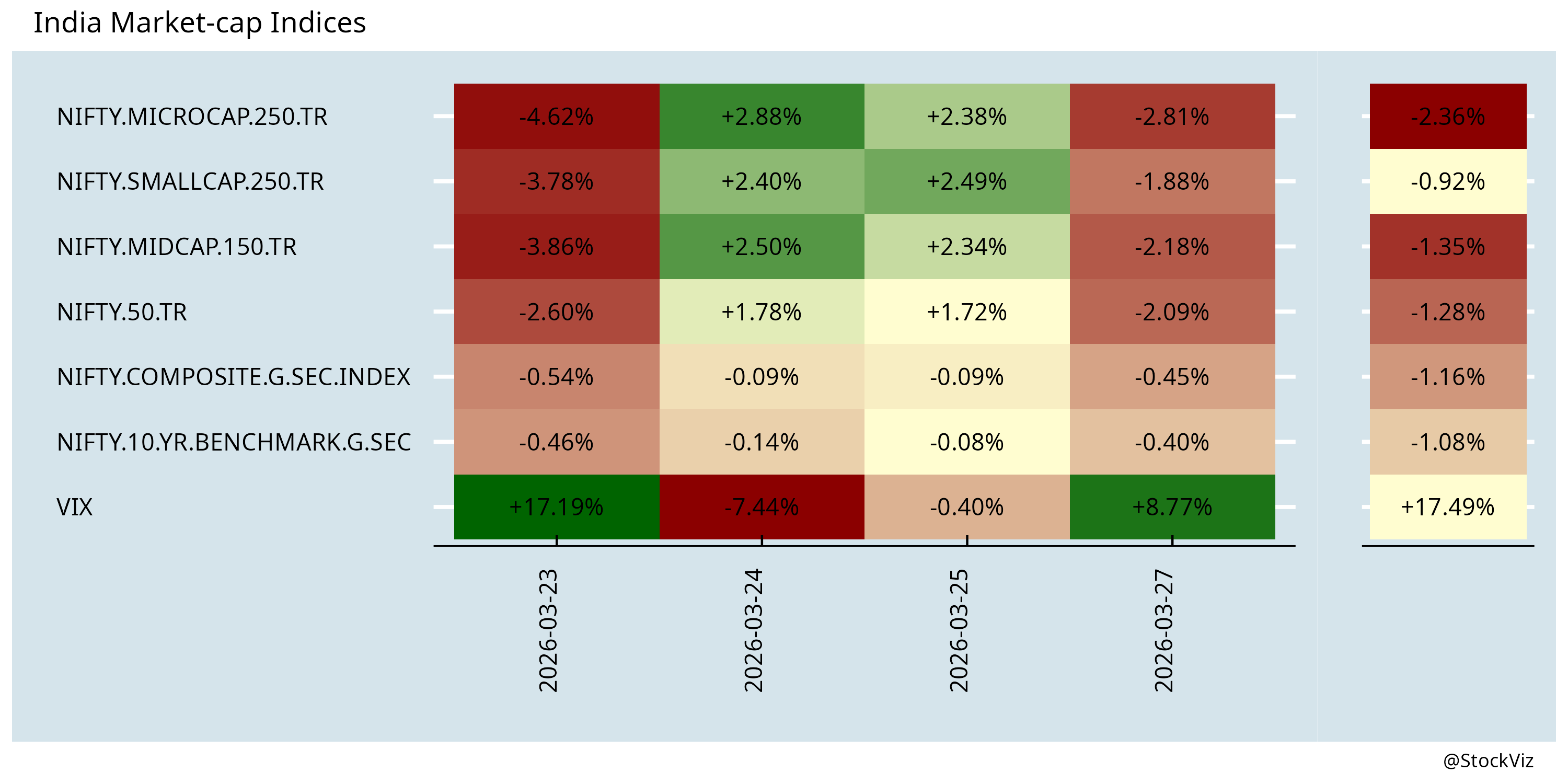
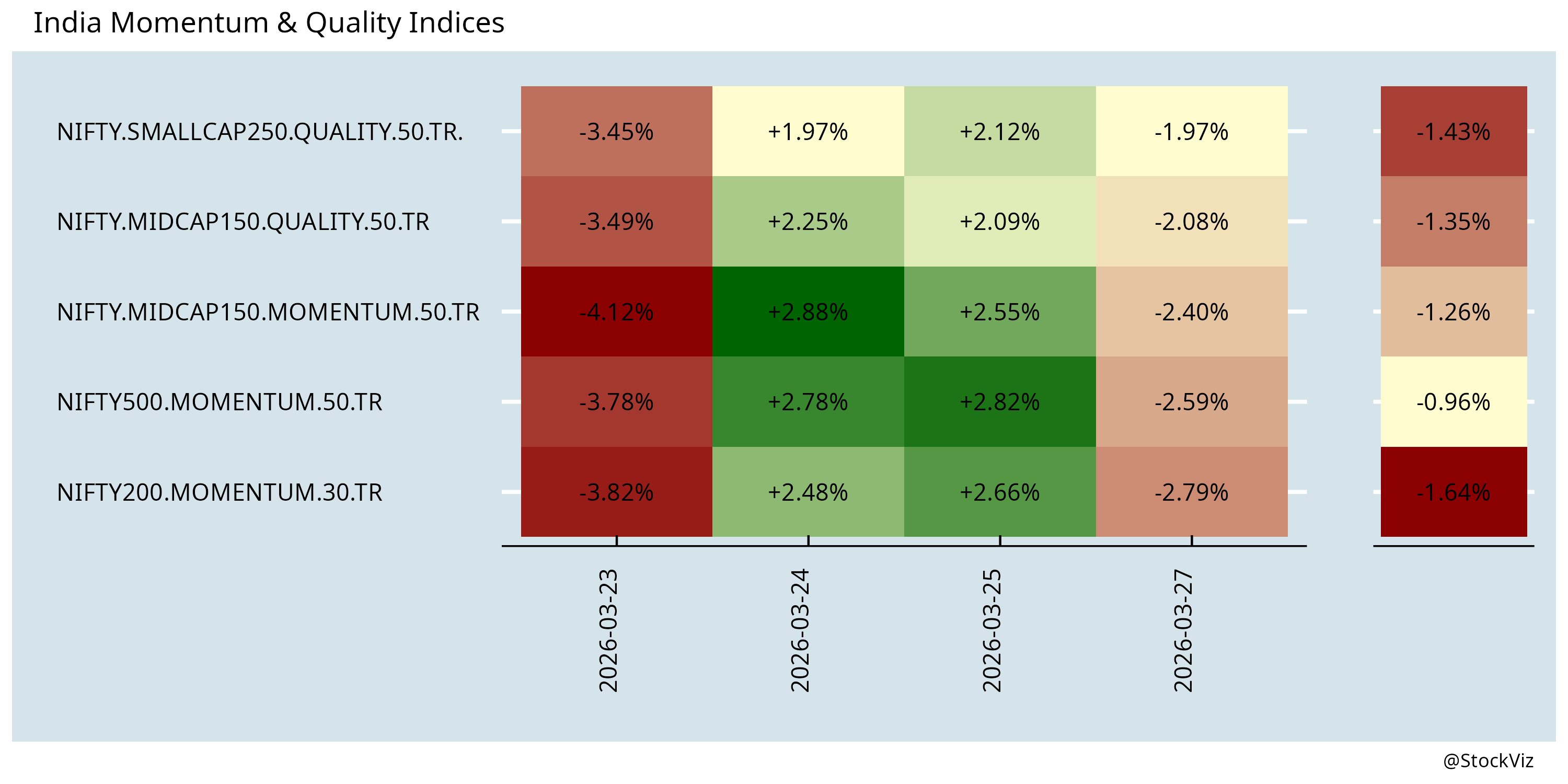
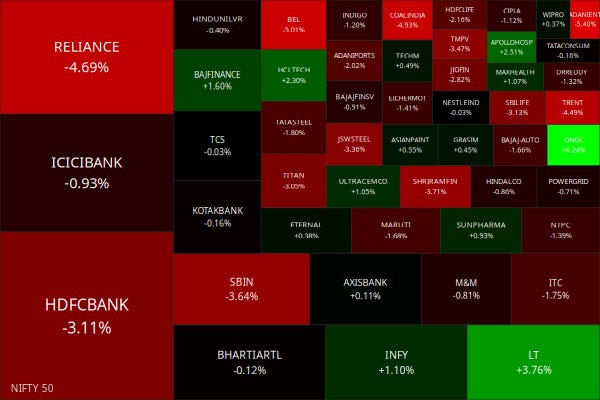
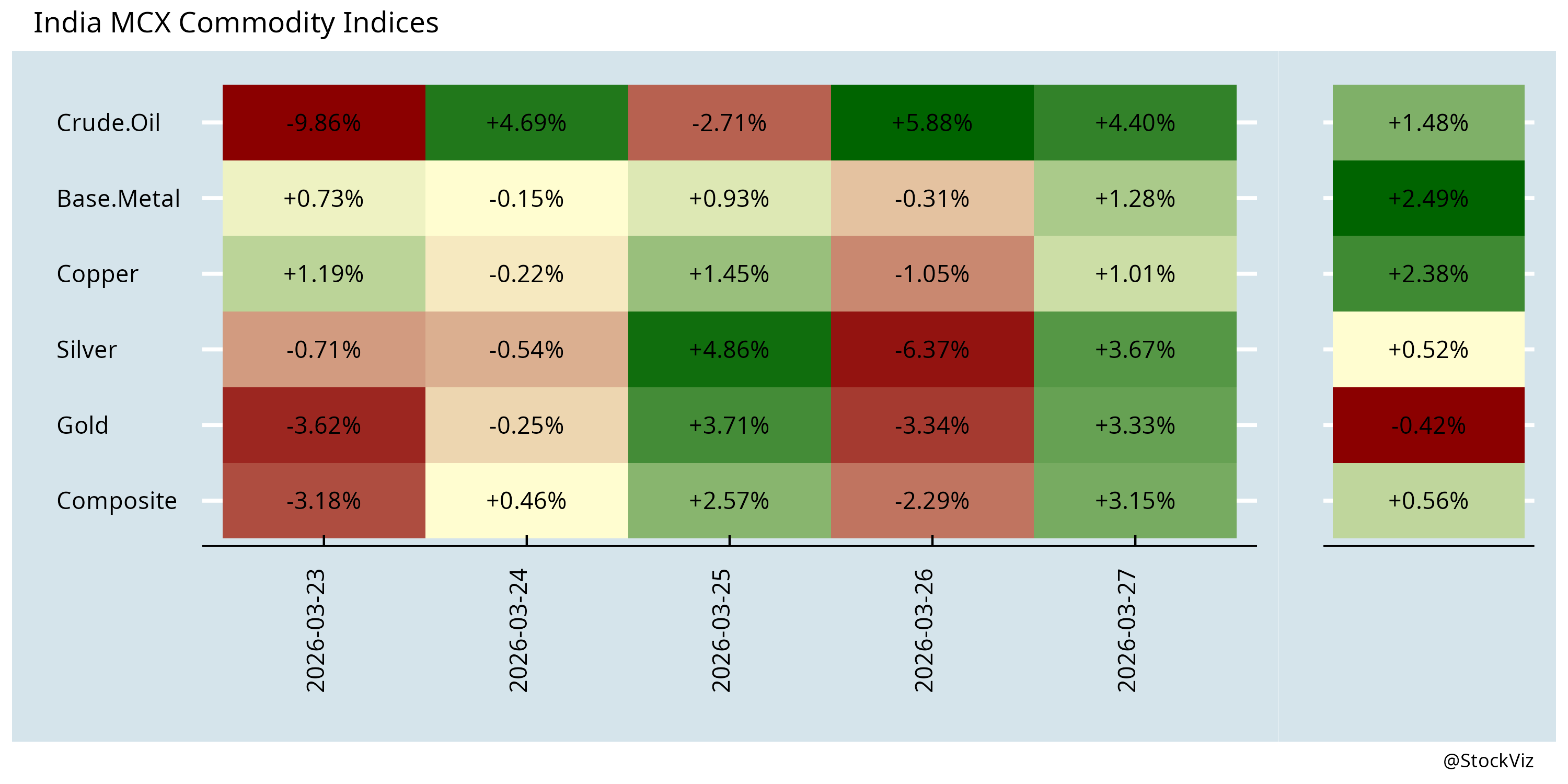
More here: country ETFs, fixed income, currencies and commodities.
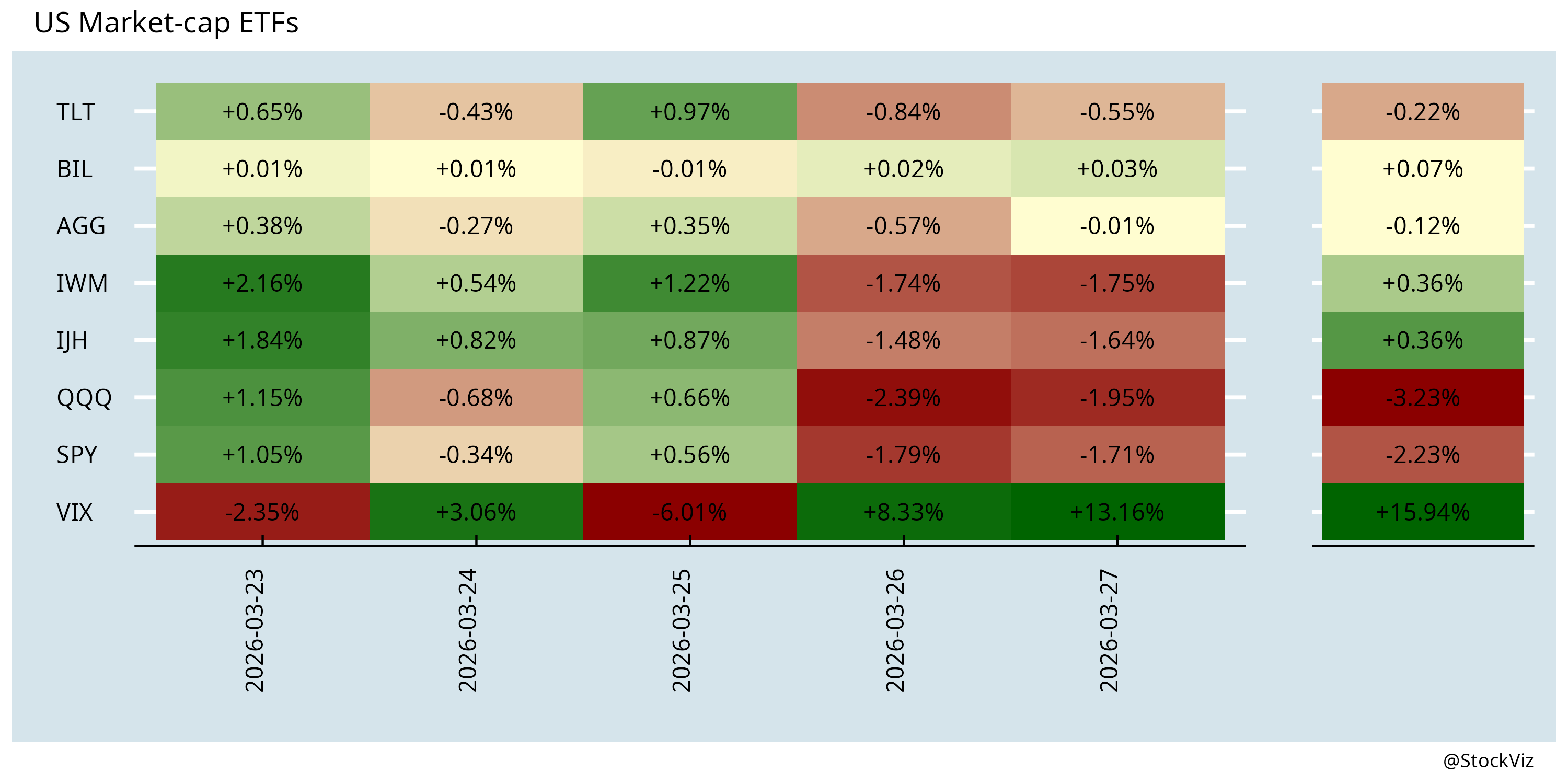
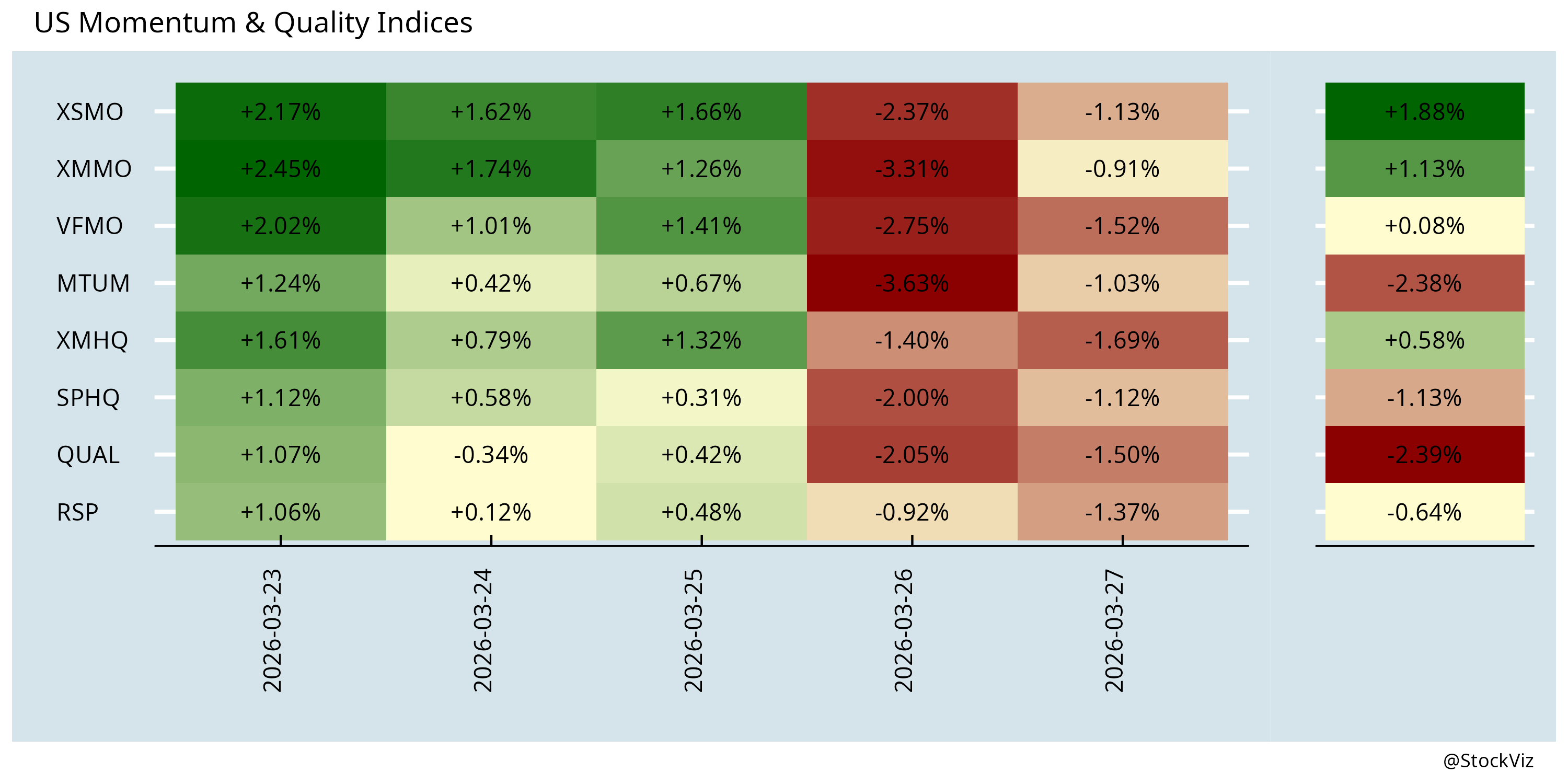
Links
Last year, nearly two-thirds of the top 100 active US stock funds by assets lagged their index. But, improbably enough, the stocks these 100 funds collectively owned beat the benchmark in 2025 (morningstar).
India
India’s private sector expanded at its weakest pace in over three years in March as price shocks from the war dampened domestic demand, yet international orders hit a record high (reuters).
Goldman Sachs has pared its growth estimate for India for 2026 (5.9% from 7%), while forecasting a 50 basis points hike in policy rates (reuters).
India has secured crude oil supplies for the next 60 days, ensuring stable fuel supplies in the country despite disruption in shipments (reuters).
India has slashed excise duties on petrol and diesel to protect consumers and curb a potential spike in inflation, while imposing windfall taxes on aviation fuel and diesel exports (reuters).
Its raining semaglutide and the regulator is not happy.

Thanks to freebies and entitlements, Himachal Pradesh has no money for capital expenditures (theprint).
Karnataka MLAs demand VIP tickets for IPL matches (deccanherald). Equality ends where privilege begins (financialexpress).
India’s urea plants are running at half capacity after force majeure declarations disrupted LNG flows through the Strait of Hormuz (cnbctv18).
ED flags Indians buying Dubai properties using credit cards (economictimes).
Germany is continuing to struggle with a shortage of skilled workers, as elderly staff retire, and there are not enough young candidates to fill their roles. To try to alleviate the problem the country is increasingly turning to workers from India (bbc).
row
The war in the Middle East has created major disruptions to global supplies of nitrogen-based crop nutrients. The focus since the conflict began has been on urea, a key nitrogen fertilizer used on corn. Prices for the nutrient have surged as the war blocks shipments through the Strait of Hormuz. What’s been largely overlooked in the chaos is the risk to phosphate fertilizers. Almost half of the world’s supply of sulfur — which is turned into sulfuric acid for the processing of phosphate fertilizer — comes from countries in the Middle East (bloomberg).
Countries around the world are facing a cliff-edge as the flow of liquefied natural gas from the Gulf comes to an abrupt end in the next 10 days, when a handful of final tankers from the region reach their destinations (ft).
This is ultimately a war between a democracy’s impatience and a theocracy’s ruthless endurance (theatlantic).
There is a very real risk that this conflict will end with Iran as the de facto master of the Strait of Hormuz and the Persian Gulf (acoup).
Trade ministers from Europe and Asia-Pacific countries will meet on the sidelines of a WTO gathering this week to hammer out priorities for building an alliance that excludes the U.S. (politico)
Britain’s petrol refineries are at risk of shutting down because of carbon tax (yahoo).
How New Zealand’s only oil refinery closed (businessdesk).
Hundreds of petrol stations across Australia run out of fuel (theguardian, theguardian).
South Korea imports around 70% of its crude oil and 20% of its liquefied natural gas from the Middle East (cnbc).
A look at countries hit by energy crisis (hindustantimes).
Russia’s ‘meat assaults’ in Ukraine cost it over 6,000 troops in four days (politico).
At least 40% of Russia's oil export capacity is at a halt following Ukrainian drone attacks (reuters).
Meme of the Week